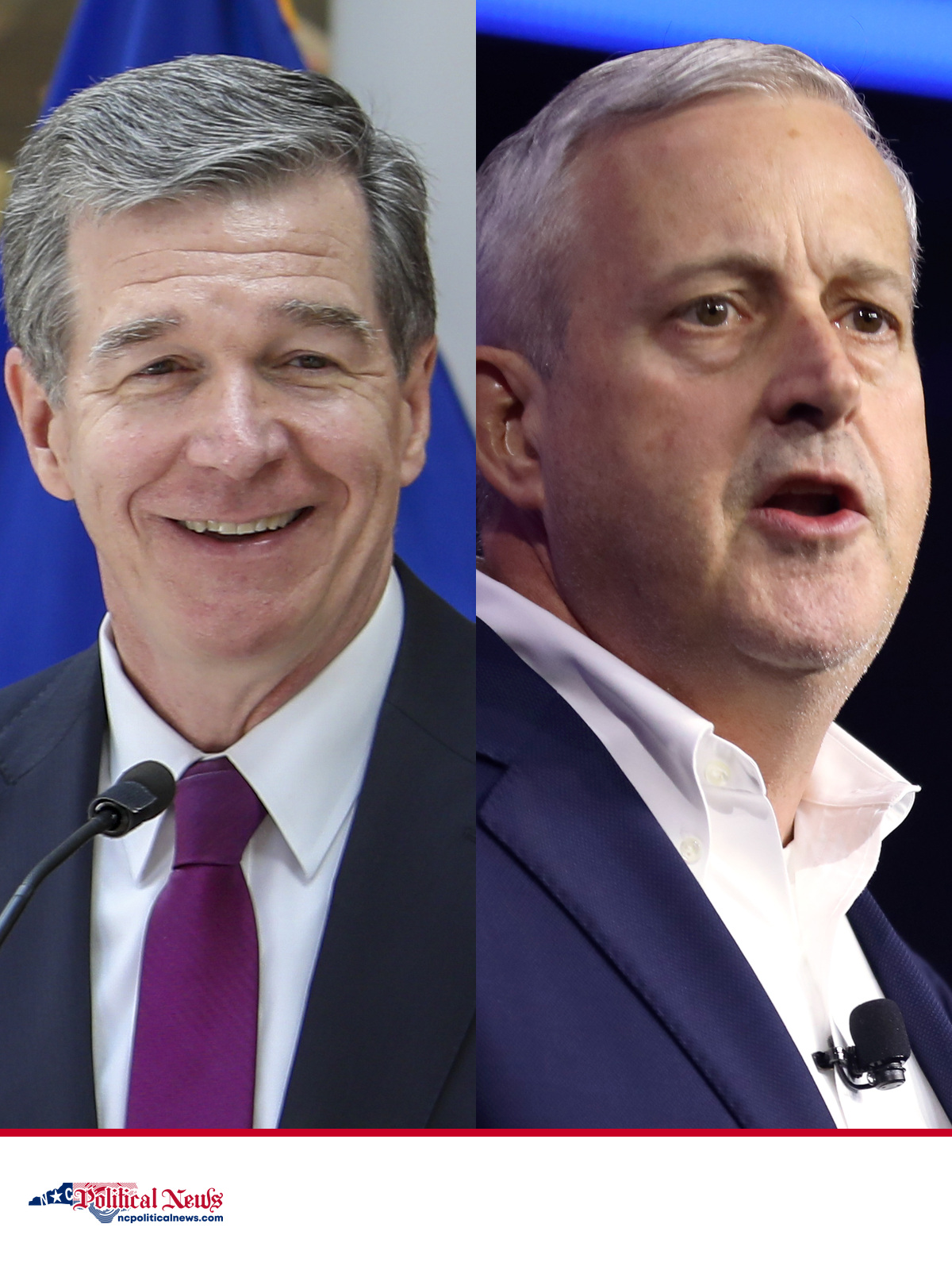
HIGH POINT – A new High Point University survey puts Democrat Roy Cooper at 50% and Republican Michael Whatley at 42% among likely North Carolina voters in the open U.S. Senate race.
The Sept. 24 release reports 3% of likely voters chose another candidate and 5% were unsure. Axios has reported that Green Party candidate Michael Dublin and Libertarian Shannon Bray also are on the ballot. HPU’s question grouped choices outside Cooper and Whatley as “another candidate.”
HPU’s Survey Research Center surveyed 1,003 North Carolina adults through an online panel supplied by Dynata. That group included 813 self-identified registered voters and 706 respondents classified as likely voters. The likely-voter figures are the basis for the Senate result.
The university describes the sample as a nonprobability panel, meaning respondents were recruited from an existing online pool rather than selected randomly from all North Carolina voters. HPU reports a plus-or-minus 3.9 percentage-point credibility interval for the likely-voter results, but says a conventional margin of sampling error is not appropriate for the survey.
HPU’s technical memo says data were collected Sept. 9-16. A companion summary page says the survey ran Sept. 6-16. The university’s public materials did not reconcile that three-day difference. The memo lists HPU as the sponsor and Dynata as the panel supplier.
The contest is among the races that could help determine control of the U.S. Senate. Axios reported that Cooper and Whatley are competing for the seat being vacated by Republican Sen. Thom Tillis. The HPU result is a snapshot of stated voter preference during its field period, not a forecast or an election result.
The survey adds a new university-sponsored data point to a race that has drawn national attention. Differences in samples, likely-voter models, question wording and field dates mean its percentages should not be treated as directly interchangeable with results from other pollsters.
Sources
- High Point University Poll 127 technical memo
- High Point University: Poll 127 summary
- Axios Charlotte: North Carolina Senate race context
Photo Credit: Roy Cooper (left): U.S. Army photo by Staff Sgt. Mary Junell / North Carolina National Guard, public domain in the United States, source. Michael Whatley (right): Gage Skidmore, source, CC BY-SA 2.0. Both photographs cropped and combined; composite distributed under CC BY-SA 2.0.
Editor’s Note: This article was drafted with the assistance of artificial intelligence and was reviewed and fact-checked by a member of the NC Political News editorial team before publication.