
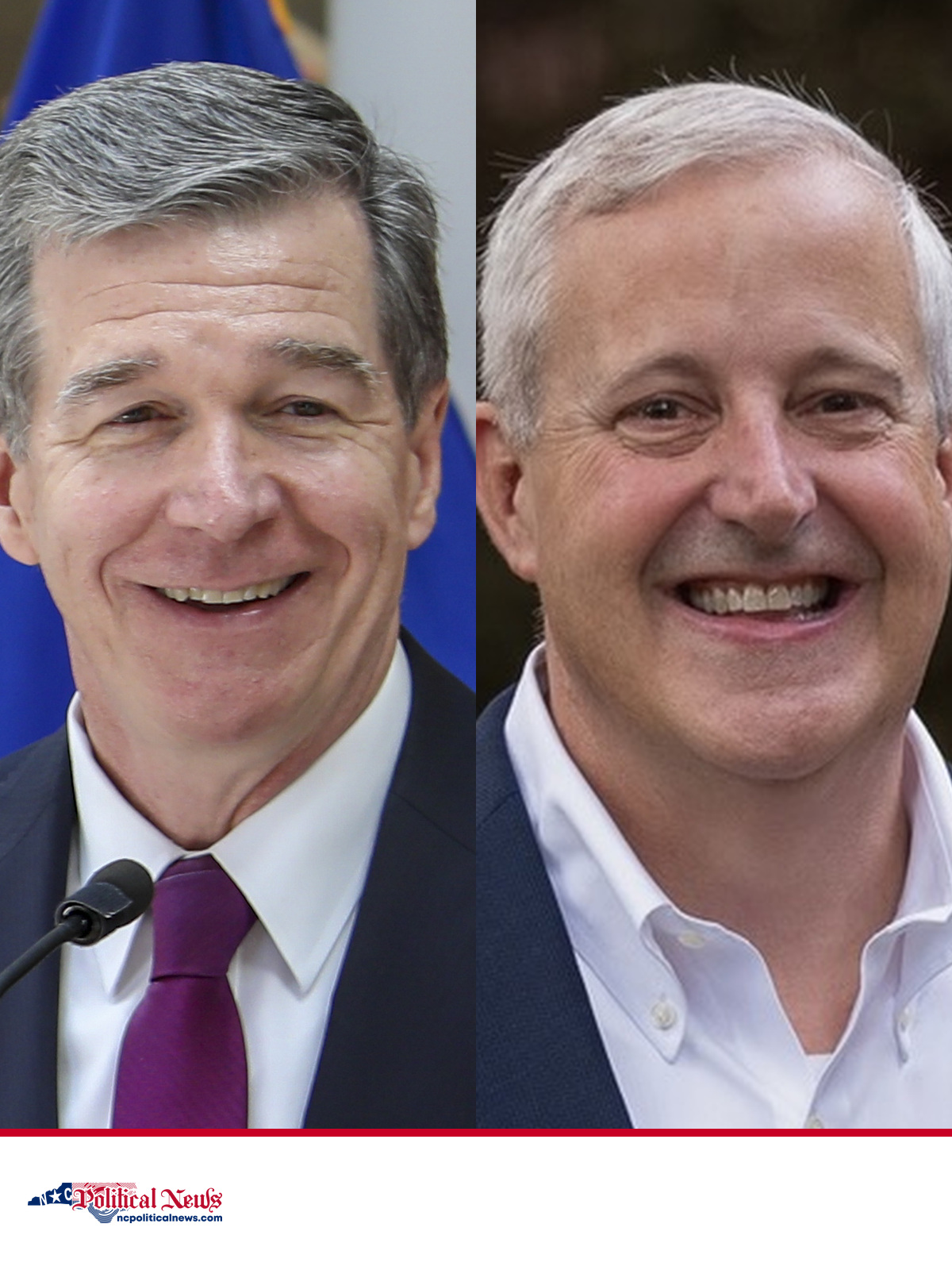
RALEIGH — Democrat Roy Cooper led Republican Michael Whatley 54% to 40% in a SurveyUSA poll released Oct. 13, offering a snapshot of North Carolina’s U.S. Senate race before in-person early voting began.
The survey, commissioned by WRAL-TV and WSOC-TV, found 5% undecided and 1% supporting another candidate. Its Senate results covered 643 respondents classified as likely voters or people who had already voted.
SurveyUSA interviewed 900 adults online Oct. 7-11 using a nonprobability panel. It weighted responses using demographic and party-affiliation benchmarks and reported a credibility interval of plus or minus 5 percentage points for the Senate question. The named sponsors were television stations.
The release is a week old as of Oct. 20. It measures responses during its field period, rather than preferences collected after early voting started. A poll also cannot establish who will ultimately turn out or how people will vote on Election Day.
An earlier East Carolina University survey provides separate background. Released Oct. 8 and conducted Sept. 30-Oct. 3, it put Cooper at 50% and Whatley at 43%, with 6% undecided and 2% choosing a minor-party or write-in candidate. Rounded percentages can exceed 100%.
ECU’s initial ballot question allowed undecided answers. In a separate forced-choice question, Cooper received 53% and Whatley 46%. Those figures should not be substituted for the initial responses without identifying the different question.
The university’s survey included 810 likely voters, combining text-to-web responses with an online panel, and reported a credibility interval of plus or minus 4 percentage points. It also found that 55% named the economy and cost of living as their most important voting issue.
The surveys used different methods and were conducted at different times. Their results alone do not establish a change in either candidate’s support.
North Carolina’s in-person early voting period ends Oct. 31. Election Day is Nov. 3.