
WINSTON-SALEM – A federal judge on Monday denied a request to pause North Carolina’s absentee-ballot sealing and signature rules during the ongoing election.
U.S. District Judge Thomas D. Schroeder issued the 72-page order Oct. 19 after an Oct. 14 hearing. The decision leaves the challenged State Board of Elections guidance in place while the lawsuit continues. It is a preliminary ruling, not a final judgment on the merits.
The North Carolina Alliance for Retired Americans, North Carolina Asian Americans Together, Down Home North Carolina and two voters sued the state board and the Durham and Guilford county election boards Sept. 22. They sought an injunction against provisions in guidance issued Sept. 4, the day North Carolina began mailing absentee ballots.
One challenged provision requires a ballot to be sealed inside its inner container-return envelope. Under the guidance, an unsealed inner envelope requires the ballot to be spoiled and reissued, even if its outer envelope is sealed. The earlier guidance generally accepted the ballot if either envelope was sealed.
The signature provision directs county boards to determine whether the name signed is the voter’s name. The order says boards must presume the signature belongs to the voter absent clear evidence otherwise, even when it is illegible. Schroeder said the guidance does not direct officials to match a signature against another signature.
The plaintiffs argued the requirements could invalidate qualified voters’ ballots for immaterial errors and expose voters to arbitrary decisions. They raised claims under federal civil rights law and constitutional protections for voting, equal treatment and due process.
Schroeder concluded they had not made the showing needed for preliminary relief. He cited their 18-day delay before filing suit and the risks of changing election administration after voting had started, applying the Supreme Court’s principle against late changes to election rules.
He also found that the plaintiffs had not clearly demonstrated an undue burden. The order points to notice procedures and opportunities to submit another ballot or vote in person, with the options depending on when a deficiency is identified. It does not require county boards to count the challenged, improperly submitted ballot.
Sources
- Filed memorandum opinion and order, Oct. 19, 2026
- Courthouse News Service independent reporting
- Carolina Journal independent reporting, Oct. 19, 2026
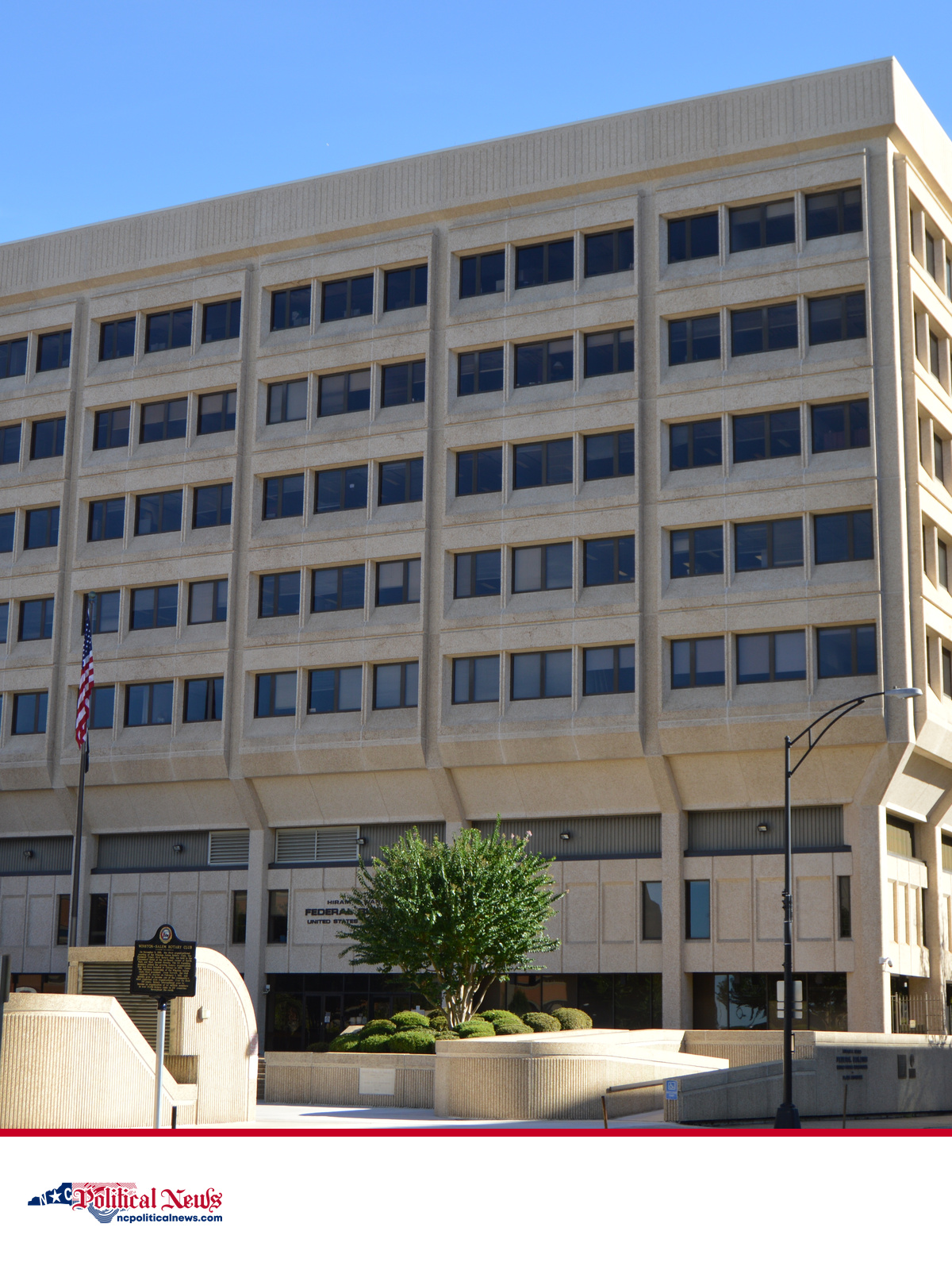
Photo Credit: File photograph of the Hiram H. Ward Federal Building and U.S. Courthouse in Winston-Salem, Oct. 13, 2018, by Nyttend via Wikimedia Commons. Released into the public domain by the photographer. Cropped and resized.
Editor’s Note: This article was drafted with the assistance of artificial intelligence and was reviewed and fact-checked by a member of the NC Political News editorial team before publication.