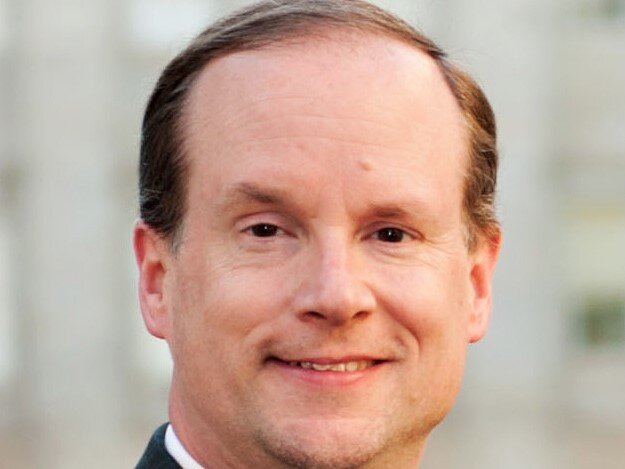
John Hood: Five political questions for 2021
After getting many political predictions wrong in 2016, including but not limited to the results of the presidential election, I threw my long-cherished crystal ball out and started building a new one.
After getting many political predictions wrong in 2016, including but not limited to the results of the presidential election, I threw my long-cherished crystal ball out and started building a new one.
When Democrats attack pro-growth tax reform as “trickle-down economics,” I can understand their rhetorical intent. But the charge is silly on multiple levels — including the fact that every Democrat who ever serves in state or local office spends great time and effort to try to recruit business executives, entrepreneurs, investors, and high-value professionals to their communities.
May I tell you a bit about the pioneering Campbells of eastern North Carolina? The patriarch of the family, minister James Archibald Campbell, founded a school in Buies Creek in 1887 that we now know as Campbell University. In the early days, privation and bad luck sometimes forced “Jim Arch” to keep institution alive through sheer force of will.
Not all heroes wield blades. And many problems cannot be solved simply by hacking away at them. Their causes are complex and interconnected. They twist and turn. They are fabrics that must be unraveled, patiently and prudently, to be understood. Often, solutions come from following seemingly small threads in unexpected directions, and weaving them into something new.
As of November, North Carolina’s state government has some $4 billion in unreserved cash in its General Fund, plus well north of $1 billion in its rainy-day account and other reserves.
Despite the current spike in COVID-19 infections and deaths, there is good news on the not-so-distant horizon. Three effective vaccines are in the pipeline. Some North Carolinians — those battling coronavirus on the frontlines as well as those put at greatest risk by infection — will being vaccinated in the coming weeks.
RALEIGH — In its daily newsletter called “The Morning,” the New York Times had this to say about California voters defeating a proposition that would have reinstated racial preferences in state hiring, contracting, and university admissions:“Polls that ask broadly about affirmative-action programs for racial minorities find most Americans to be in favor of them. Polls that specifically ask whether employers and colleges should take race into account when making decisions find that most Americans say no. These two patterns are contradictory.”
While modern conservatism in America brings together a number of discrete groups, interests, and priorities, one of its unifying themes is maximizing freedom — by which conservatives mean maximizing the right of individuals, families, and private associations to make their own decisions rather than having them overruled by government coercion.
The North Carolina Oil and Gas Commission will meet virtually on Tuesday, November 10. The meeting will begin at 10 a.m. The public may join the meeting by computer or phone. Among its duties, the Commission has the authority to regulate the spacing of wells for oil and gas exploration, establ
By Kari Travis Carolina Journal News Service A record 5.5 million or so votes have been cast in North Carolina, and Republicans are days away from confirming a potential sweep of contests for seats on the N.C. Supreme Court and the N.C. Court of Appeals. But it’s
Cornerstone Building Brands, Inc. to create dozens of new jobs in Nash County Cornerstone Building Brands, Inc. (NYSE: CNR), a manufacturer of exterior building products, will create 38 new jobs in Nash County, Governor Roy Cooper announced recently. The company will invest appro
Nuvotronics to add 150 new jobs in Durham County Nuvotronics, an advanced technology manufacturer of microelectronics components and subsystems, will create 150 jobs in Durham County, North Carolina Governor Roy Cooper announced recently. The company will invest $50 million over