
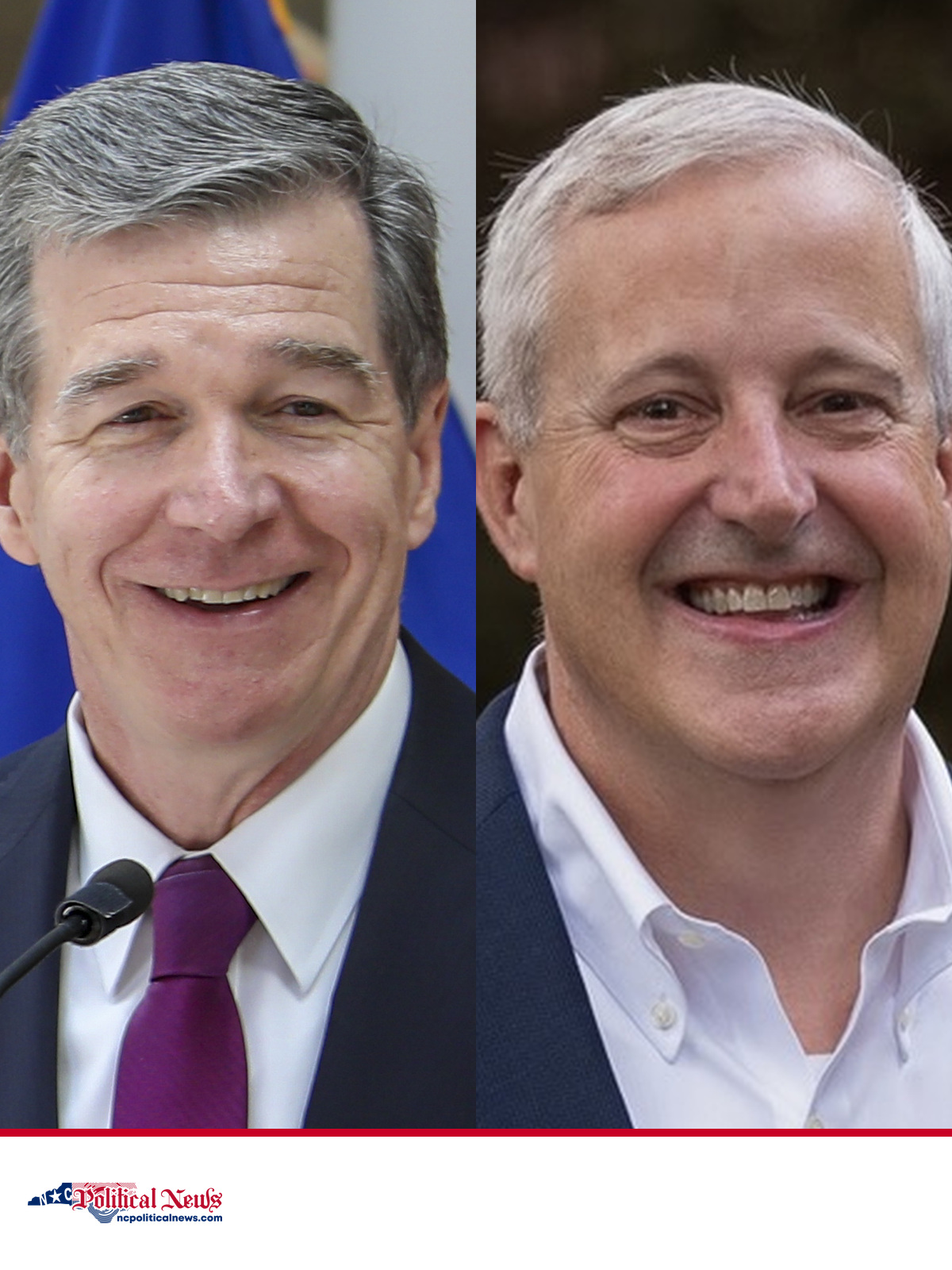
RALEIGH – An AARP survey found Democrat Roy Cooper leading Republican Michael Whatley statewide while voters age 50 and older favored Whatley, highlighting a sharp age split in North Carolina’s U.S. Senate race.
Cooper received 53% support among likely voters, compared with 42% for Whatley and 5% who were undecided or volunteered another choice. Among voters age 50 and older, Whatley led 51% to 45%. Voters ages 18 to 49 favored Cooper 66% to 27%.
Subgroup estimates are based on fewer respondents than the full sample and carry more uncertainty. The survey’s overall margin of sampling error was plus or minus 2.9 percentage points, but AARP did not publish a separate margin of error for each age group.
AARP commissioned the bipartisan polling team of Fabrizio Ward and Impact Research. The firms interviewed 1,115 likely North Carolina voters from Sept. 17 through Sept. 20. The sample was randomly drawn from the state voter file, with 40% of interviews conducted by live cellphone calls, 15% by live landline calls and 45% through text messages linking to an online survey.
The poll also found a motivation gap by age. Eighty-three percent of voters age 50 and older rated their motivation to vote a 10 on a 10-point scale, compared with 66% of voters under 50. NC Newsline reported that older voters have typically turned out at higher rates, adding political consequence to the survey’s age split.
Affordability was the leading issue among older voters in the survey. Ninety-three percent said they would be more likely to support a candidate who would ensure workers receive earned Social Security benefits, while 84% said the same about expanding Medicare’s ability to negotiate prescription-drug prices. Those questions measure stated issue preferences, not a guarantee of how respondents will vote.
AARP represents people age 50 and older and sponsored the research. WFDD separately reported that rising living costs, Social Security and Medicare were central concerns in the survey.
Sources
- AARP North Carolina voter survey
- NC Newsline report on the survey
- WFDD report on older voters’ priorities
Photo credit: Roy Cooper: U.S. Army photo by Staff Sgt. Mary Junell / North Carolina National Guard, public domain in the United States. Michael Whatley: campaign-provided press photograph from the Whatley for Senate media toolkit. Images cropped and combined by NC Political News.
Editor’s Note: This article was drafted with the assistance of artificial intelligence and was reviewed and fact-checked by a member of the NC Political News editorial team before publication.