It’s around lunchtime on a Wednesday in mid-July, the bright remnants of the morning quickly morphing into the typical hot, heavy Carolina afternoon. A dozen or so people — diners and drinkers — survey downtown Chapel Hill from atop a third-floor balcony at Top of the Hill Restaurant & Brewery.
North Carolina’s state government has a multi-billion-dollar surplus. Its enormity has multiple causes: past spending discipline, revenue growth from a resurgent economy, and gobs of borrowed federal money. Its enormity also presents North Carolina’s conservative-run legislature with a challenge.
During his recent trip to Illinois, President Joe Biden made the case for funding trillions of dollars in infrastructure projects through increasing the corporate tax rate. Most Americans agree that infrastructure is critical to the wellbeing of any society. We all want to drive on safe roads, have drinkable water come from the tap, and be able to reliably access broadband in our communities. But where the disagreement typically occurs is how we will pay for these public goods and services.
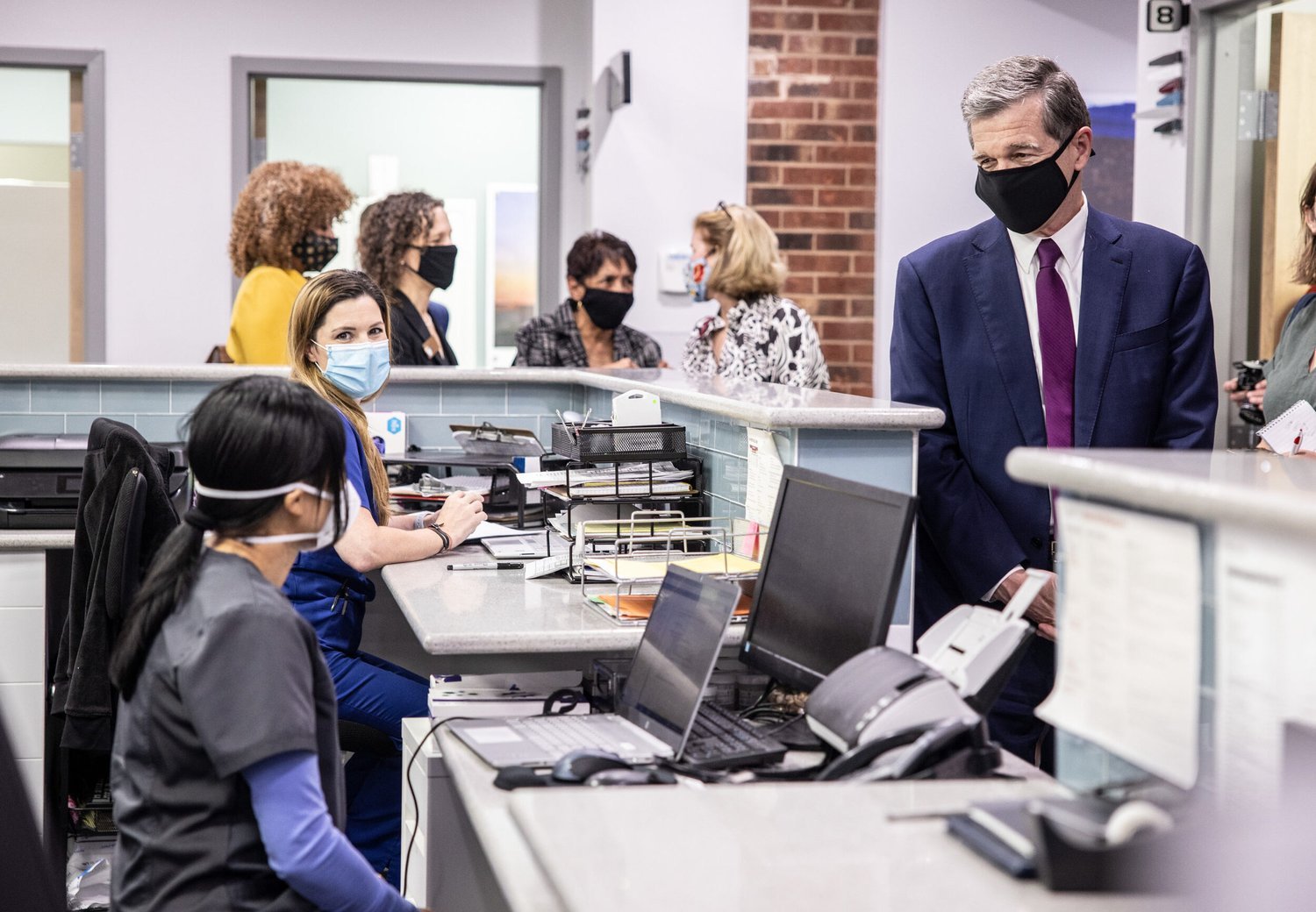
On the heels of a new executive order requiring state employees to get the COVID-19 vaccine or be required to wear a mask and submit to weekly testing, Gov. Roy Cooper is urging other members of the Council of State to push their own staffs to get vaccinated.
The city of Charlotte is set to approve an ordinance aimed at barring businesses and employers from discriminating against people based on transgender identity and other “protected classes.” The measure is similar to the one that launched the “Bathroom Bill” controversy in 2016 and led to a significant fundraising advantage for Democrats in that year’s elections.
Some Republican members of the N.C. Council of State used a meeting Tuesday, Aug. 3, to underscore the challenges employers face in finding workers because, at least in part, of generous unemployment benefit payments from the federal government.
When demand exceeds supply, prices rise. While the problem of housing affordability has many facets and effects, that inescapable fact explains a lot about why so many North Carolinians struggle to afford the homes they’d like to buy or rent.