May I tell you a bit about the pioneering Campbells of eastern North Carolina? The patriarch of the family, minister James Archibald Campbell, founded a school in Buies Creek in 1887 that we now know as Campbell University. In the early days, privation and bad luck sometimes forced “Jim Arch” to keep institution alive through sheer force of will.
Among the pagan-inspired customs of the Christmas season, there has come to be the ritualistic burning of the straw man. Specifically, I refer to the traditional seasonal column by a sly journalist or political analyst asserting that the exchange of Christmas gifts is a major lose-lose for the economy.
Not all heroes wield blades. And many problems cannot be solved simply by hacking away at them. Their causes are complex and interconnected. They twist and turn. They are fabrics that must be unraveled, patiently and prudently, to be understood. Often, solutions come from following seemingly small threads in unexpected directions, and weaving them into something new.
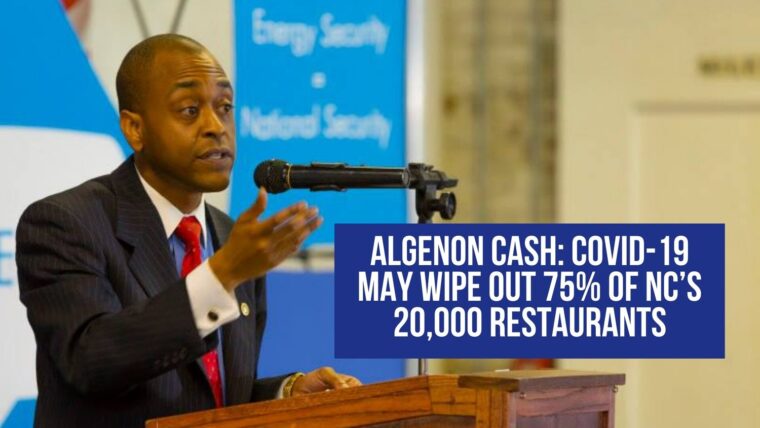
Small independently owned restaurants are facing an extinction-level event as we move deeper into colder months and the coronavirus spread reaches all-time highs. Without immediate financial aid, over 75% of the state’s 19,504 eating and drinking locations are in danger of closing permanently.Since the COVID-19 pandemic began in March, 17% of restaurants throughout the country (or about 110,000 establishments) have closed either permanently or long-term and 10,000 restaurants have closed over the last three months alone. As for the 10,000 restaurants that have closed over the past three months, the majority had been well-established in the industry for years, and on average, had been in business for 16 years.
As of November, North Carolina’s state government has some $4 billion in unreserved cash in its General Fund, plus well north of $1 billion in its rainy-day account and other reserves.
The U.S. Supreme Court gave states the power to regulate the companies that negotiate between insurers and pharmacies, otherwise known as pharmacy benefit managers — the jargon for middlemen. The court unanimously ruled in favor of Arkansas’ regulatory reforms Thursday, Dec. 10.
On Sept. 3, a bipartisan supermajority in the North Carolina General Assembly appropriated $30 million for rural broadband to help rural areas impacted by the pandemic. The next day, Gov. Roy Cooper issued a press release, taking credit for our work, with the following statement: “This budget followed my recommendations on school enrollment funding and invested in important areas like high-speed internet access…” Seventy-five days after the legislation passed, and 74 days after Gov. Cooper touted the investment, his administration quietly ripped this money and broadband from the hands of rural North Carolinians.
Despite the current spike in COVID-19 infections and deaths, there is good news on the not-so-distant horizon. Three effective vaccines are in the pipeline. Some North Carolinians — those battling coronavirus on the frontlines as well as those put at greatest risk by infection — will being vaccinated in the coming weeks.
Clean energy is not a partisan issue in North Carolina. Year after year, our businesses and markets demand higher levels of electricity derived from renewables. Clearly, Our investments in the sector spell out a history of success and numerous payouts — from job growth to spin-off businesses and local tax revenue.
RALEIGH — More students face repeating a grade than any time in the past century, says David Stegall, deputy superintendent of innovation at the N.C. Department of Public Instruction.Remote learning is failing North Carolina’s students. Roughly 19% of students aren’t attending classes regularly. State officials predict fewer students would graduate or advance to the next grade.
RALEIGH — In its daily newsletter called “The Morning,” the New York Times had this to say about California voters defeating a proposition that would have reinstated racial preferences in state hiring, contracting, and university admissions:“Polls that ask broadly about affirmative-action programs for racial minorities find most Americans to be in favor of them. Polls that specifically ask whether employers and colleges should take race into account when making decisions find that most Americans say no. These two patterns are contradictory.”
While modern conservatism in America brings together a number of discrete groups, interests, and priorities, one of its unifying themes is maximizing freedom — by which conservatives mean maximizing the right of individuals, families, and private associations to make their own decisions rather than having them overruled by government coercion.