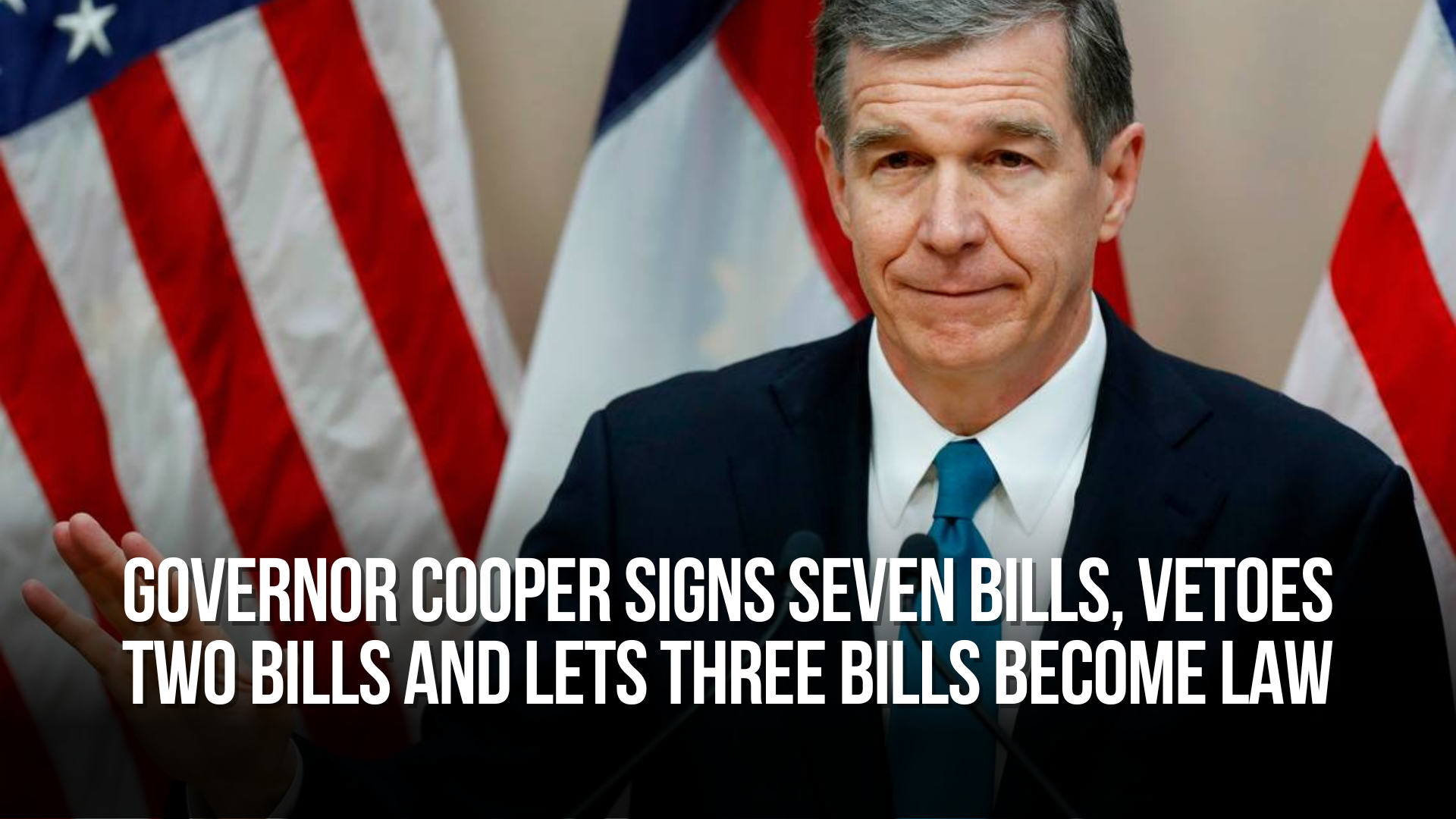
Governor Cooper Signs Seven Bills, Vetoes Two Bills and Lets Three Bills Become Law
RALEIGH: Governor Roy Cooper signed the following bills into law:
RALEIGH: Governor Roy Cooper signed the following bills into law:
Under the state's new abortion law, doctors are not allowed to prescribe abortion pills before a patient's embryo is visible on an ultrasound, which happens at about five or six weeks.
Voters told legislators Wednesday they are sick of gerrymandering because deeply partisan election districts erode democracy and make lawmakers unresponsive to residents' needs and opinions.
Protecting the people of North Carolina must be job one for the people who serve our state. It certainly is for the men and women in law enforcement who keep our communities safe each day. But law enforcement agencies across the state are facing significant staff shortages, and they’re struggling to hire and retain officers.
Legislative leaders released the finalized “2023 Appropriations Act,” continuing a decade of success in North Carolina through thoughtful spending and keeping government growth in check.
On Tuesday, the North Carolina General Assembly ratified legislation to curb abuse of fentanyl, a synthetic opioid that is up to 100 times stronger than morphine and has emerged as a deadly force in the ongoing battle against drug overdose.
The Republicans’ Frankenstein experiment that sutured promised Medicaid expansion in North Carolina to expanded legal gambling has failed.
The state’s seasonally adjusted August 2023 unemployment rate was 3.3 percent, unchanged from July’s revised rate. The national rate increased 0.3 of a percentage point to 3.8 percent.
RALEIGH: Governor Roy Cooper issued the following statement on the Republican supermajority's plan to tie Medicaid Expansion to their controversial, backroom casino plan:
Congresswoman Deborah Ross (NC-02) introduced the Protect Working Musicians Act of 2023. This legislation will give small independent artists and music creators the power to collectively negotiate with both streaming platforms and generative artificial intelligence (AI) developers for fair compensation.
On March 23rd, Republican leadership joined Democrats at the Governor’s mansion to celebrate the long overdue passage of Medicaid expansion—promising to (finally) deliver access to affordable healthcare to 600,000 North Carolinians upon the adoption of a state budget.
In the waning days of the 2023 legislative session, there seems to be no shortage of ideas of how to reshape North Carolina’s elections. From ballot signature verification to giving the General Assembly appointment power to the State Board of Elections, Republican legislators maintain their changes will instill voter confidence in the system.