
RALEIGH – The North Carolina Court of Appeals heard arguments Oct. 28 in a challenge to constitutional amendments voters approved in 2018 requiring photo identification for in-person voting and lowering the state income-tax ceiling.
The judges did not immediately rule. The hearing brought the long-running dispute back before an appellate court as North Carolinians vote on new constitutional proposals addressing voter identification and the income-tax cap.
The North Carolina State Conference of the NAACP wants the court to reverse a September 2025 trial-court decision that upheld the two older amendments. Republican legislative leaders are defending that decision.
The appeal concerns not only the amendments themselves but also how the lower courts handled an earlier state Supreme Court ruling. In its opening brief, the NAACP argues that the courts failed to follow instructions for further factual development and an evidentiary hearing.
The organization asks for the judgment to be reversed and the case returned to a single Superior Court judge. Its brief also challenges the use of judgment on the pleadings and the transfer of the case to a three-judge panel. Those are the plaintiff’s arguments, not findings by the appeals court.
At Wednesday’s hearing, attorney Martin Warf, representing legislative leaders, argued that the trial panel had applied the Supreme Court’s test to amendments ratified by voters, according to Carolina Journal’s account.
The underlying dispute challenges the authority of lawmakers elected from unconstitutional racially gerrymandered districts to initiate constitutional changes. The state Supreme Court sent the case back for more proceedings in 2022 rather than immediately removing the amendments.
The 2018 tax amendment reduced the constitutional ceiling from 10% to 7%; it did not itself set the annual income-tax rate.
The judges also questioned how approval of this year’s ballot proposals could affect the older case. Warf argued that passage would make the dispute moot, while the NAACP’s attorney said that conclusion was premature, WRAL reported.
Sources
- NC NAACP appellant opening brief, COA 26-286
- WRAL: October 28 hearing report
- Carolina Journal: October 28 hearing account
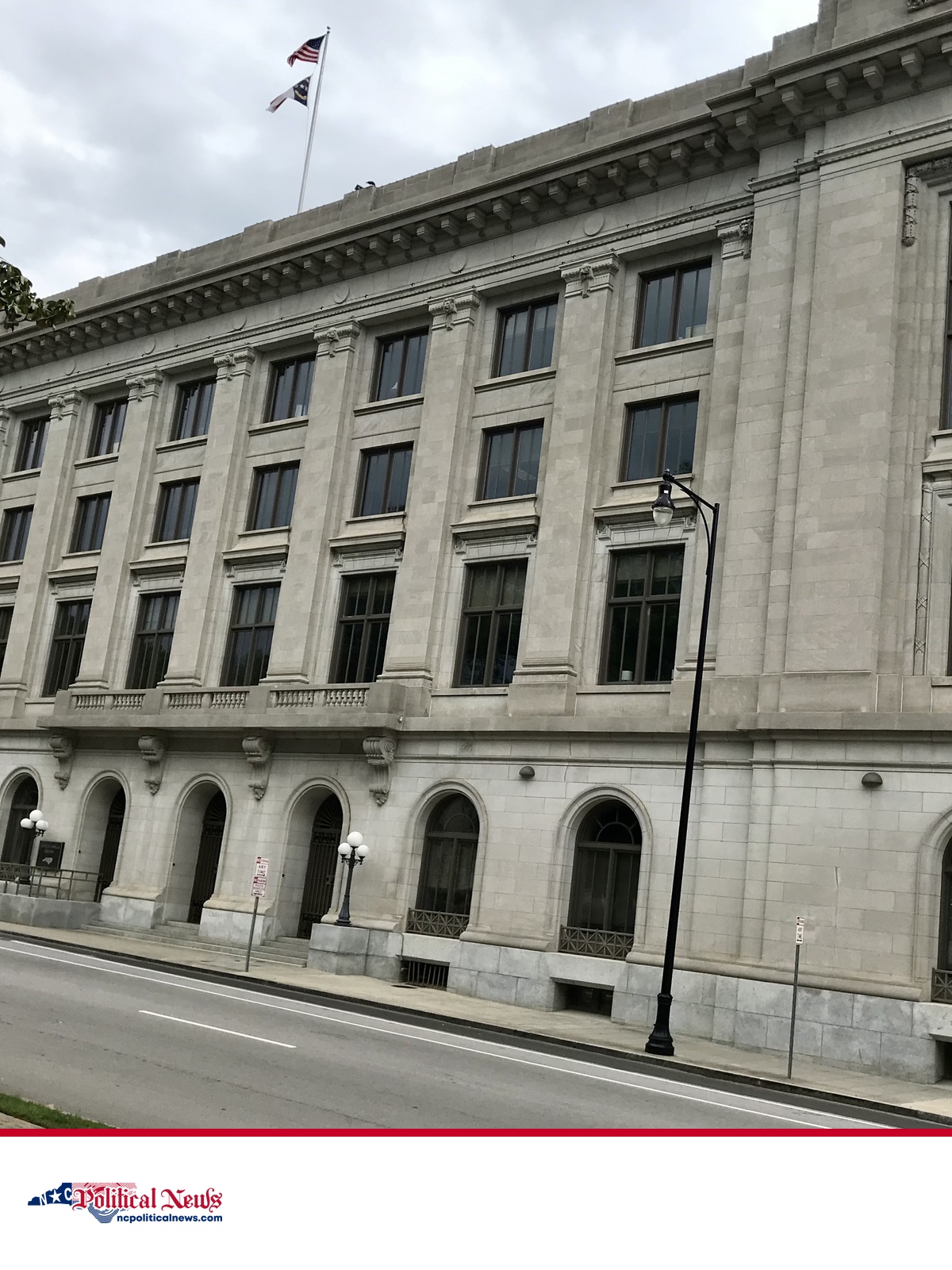
Photo Credit: File photograph of the North Carolina Court of Appeals Building in downtown Raleigh, April 16, 2023, by Indy beetle, via Wikimedia Commons; CC0 1.0 public-domain dedication. Cropped and resized. Context image, not a photograph of the October 28, 2026 hearing.
Editor’s Note: This article was drafted with the assistance of artificial intelligence and was reviewed and fact-checked by a member of the NC Political News editorial team before publication.