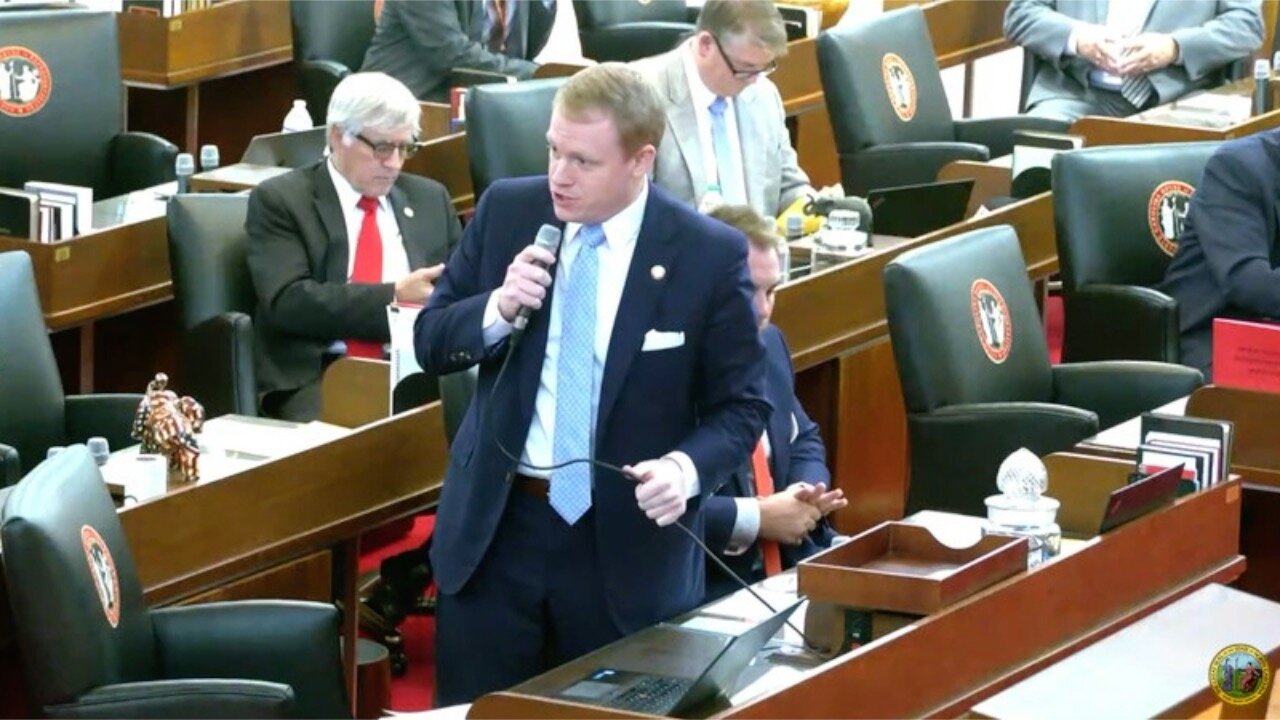
A bill to establish a “regulatory sandbox” by waiving certain obstacles for a trial period for fast-emerging financial and insurance products and services is one step closer to becoming law. It cleared the Senate Commerce and Insurance Committee on Tuesday, Sep. 21.
Even in North Carolina, the rejection of fundamental American principles thunders ahead. The proof? Gov. Roy Cooper vetoed an anti-critical race theory bill on Sept. 10. If one reads the text, it’s hard to imagine political leaders opposing these principles a few years ago. Simply put, the bill works to reinforce the American tenets of equality and our E Pluribus Unum motto.
Two new laws in North Carolina will protect visitation and religious rights for patients and long-term care residents during emergencies, like the COVID-19 pandemic.
Attorney General Josh Stein reached a consent judgment with Stepping Stone Phlebotomy LLC (also known as Stepping Stone Medical), a medical training program in Statesville he sued in June 2020 for operating without license.
The North Carolina Department of Health and Human Services (DHHS) today announced the hiring of Victor Armstrong as the Department’s first ever Chief Health Equity Officer. NCDHHS created the position as well as the Office of Health Equity to lead its focus to advance health equity and reduce disparities in opportunity and outcomes for historically marginalized populations.
From the coast to the mountains, communities across North Carolina face flooding challenges year in and year out. Our state experienced more than $22 billion in damage just from Hurricanes Matthew and Florence alone.
The state House voted 58-47 on Wednesday, Sept. 15, to endorse a bill requiring the state attorney general to get approval from legislative leaders before settling lawsuits on their behalf. The bill now heads to the governor.
A split 2-1 state Superior Court panel has rejected North Carolina's voter ID law, five months after holding a trial in the case. The court majority labeled the 2018 law racially discriminatory and unconstitutional.
The income of the median American household fell by nearly 3% last year as the COVID-19 pandemic and subsequent regulations shuttered many businesses for months, closed others for good, and forced still other employers to cut back on hours and wages for the people they still employed.