
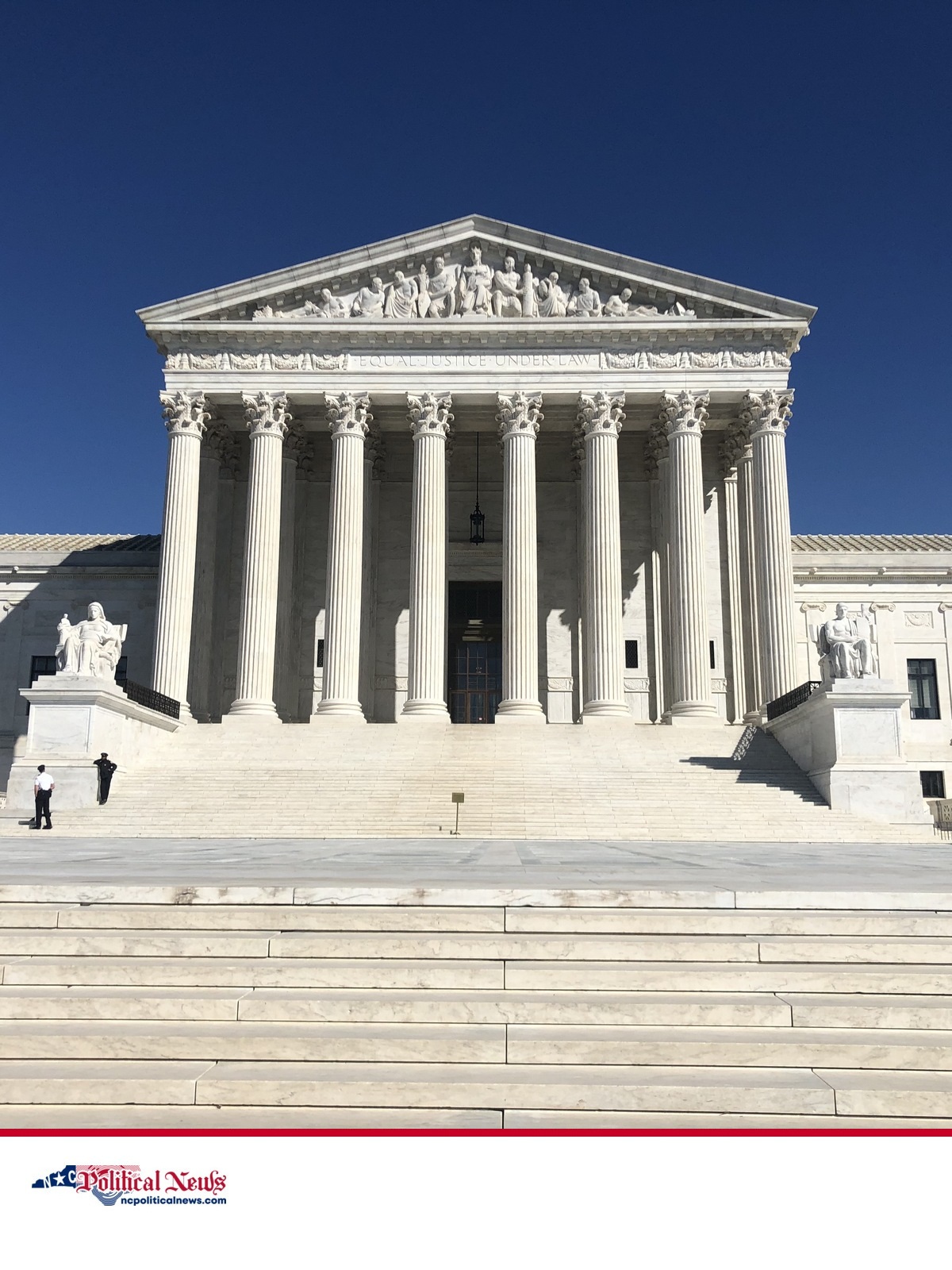
WASHINGTON – The U.S. Supreme Court on Wednesday extended a pause in a political advertising-rate case involving North Carolina U.S. Senate candidate Roy Cooper, staying a Fourth Circuit order that had required the Federal Communications Commission to act within 48 hours.
The court’s unsigned Oct. 14 opinion granted the FCC a stay while the agency seeks Supreme Court review of the lower court’s order. The stay will end automatically if the justices decline to hear the case. If they accept it, the pause will remain until the Supreme Court sends down its judgment.
Justices Sonia Sotomayor and Ketanji Brown Jackson said they would have denied the applications. The majority wrote that the Fourth Circuit used an extraordinary remedy in directing the FCC to issue a final decision within two days, while the agency’s review was still underway.
The dispute centers on the FCC’s March notice about the lowest unit charge for campaign advertising. The notice said political candidates, political parties and some joint fundraising committees engaged in coordinated activity are entitled to favorable broadcast rates during the period before an election.
Cooper and three other Democratic congressional candidates asked the full commission to set aside that notice. They argue federal law reserves the lowest rate for candidates. The Fourth Circuit ordered the FCC on Oct. 7 to resolve the candidates’ application by Oct. 9, prompting the agency and Republican committees to seek Supreme Court intervention.
Chief Justice John Roberts temporarily paused the deadline on Oct. 8. Wednesday’s action by the full court replaces that administrative stay with a longer one tied to possible Supreme Court review.
The case has a direct North Carolina consequence because Cooper is the Democratic nominee for the state’s open U.S. Senate seat. The rate policy affects the price party committees can pay for television and radio advertising during the final weeks before the Nov. 3 election.
The Supreme Court’s order does not decide whether the FCC policy is lawful or resolve the candidates’ underlying challenge. It leaves the agency free to continue its review without the Fourth Circuit’s 48-hour deadline.
Sources
- U.S. Supreme Court per curiam opinion in FCC v. Brown, Oct. 14
- Fourth Circuit Oct. 7 opinion in No. 26-2230
- Reuters report on the Supreme Court stay, Oct. 14
Photo Credit: Marielam1 via Wikimedia Commons, CC BY-SA 4.0. Cropped; adaptation distributed under CC BY-SA 4.0.
Editor’s Note: This article was drafted with the assistance of artificial intelligence and was reviewed and fact-checked by a member of the NC Political News editorial team before publication.