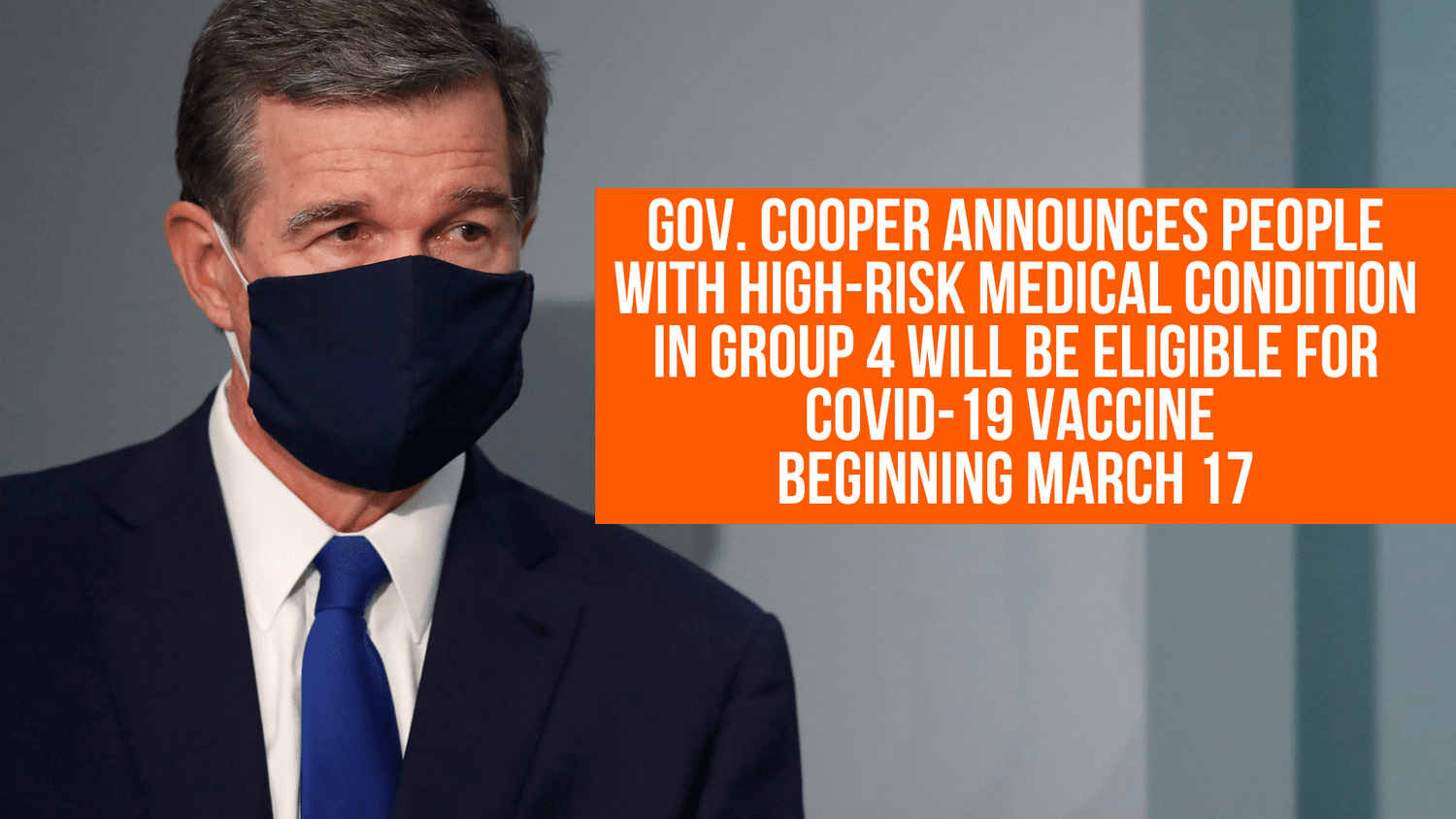
Governor Roy Cooper and North Carolina Department of Health and Human Services Secretary Mandy K. Cohen, M.D. gave an update on the state’s current data, trends and vaccination progress. Today also marks the opening of vaccine eligibility for people who have a medical condition that puts them at higher risk for severe illness or who live in certain congregate settings.
Beginning today (March 17), people in Group 4 who have a medical condition that puts them at higher risk of severe COVID-19 illness and those who live in certain congregate settings will be eligible for vaccination.
The North Carolina Department of Health and Human Services is updating its visitation guidance for long-term care facilities to allow for in-person, indoor or outdoor, visitation in most circumstances. The change aligns with new guidance released this week from the Centers of Medicare and Medicaid Services and the Centers for Disease Control and Prevention and reflects rapidly improving trends in long-term care facilities.
Responding to COVID-19’s death, suffering, and loss, by necessity governments swept aside some rules that let patients get care from medical professionals who weren’t doctors. As we approach widespread immunity, either with vaccinations or COVID patients recovering, questions about whether these regulations that blocked patients from seeing health providers were needed. Period.
The $1.9 trillion “COVID relief” bill just enacted by Congress and signed by President Joe Biden gives out $1,400 checks to most Americans. It boosts the child-tax credit, keeps weekly unemployment-insurance checks $300 higher than normal, and throws lots of other (borrowed) money around.
Thousands of North Carolina parents with school-age children will soon begin receiving additional assistance to purchase food through the Pandemic Electronic Benefits Transfer Program, or P-EBT, which has been renewed for the 2020-21 school year.
While I will ask legislators to revisit some areas of this legislation, including changes necessary to quickly deliver rental assistance, these funds will bring needed relief for people who are struggling, schools and small businesses as we strive to emerge from this pandemic.
Today, Governor Roy Cooper and North Carolina Department of Health and Human Services Secretary Mandy K. Cohen, M.D. announced beginning on March 17, people in Group 4 who have a medical condition that puts them at higher risk of serious illness and people who live in certain congregate settings will be eligible for vaccination. The rest of Group 4, which includes other essential workers will become eligible April 7. (See Deeper Dive)
Parents in 14 North Carolina public school districts would have the option of sending their children to full-time, in-person instruction under a local bill approved by the N.C. House K-12 Education Committee on Tuesday, March 9.
The North Carolina Department of Health and Human Services has expanded its vaccine data dashboard to provide more demographic data on people who are partially or fully vaccinated against COVID-19.
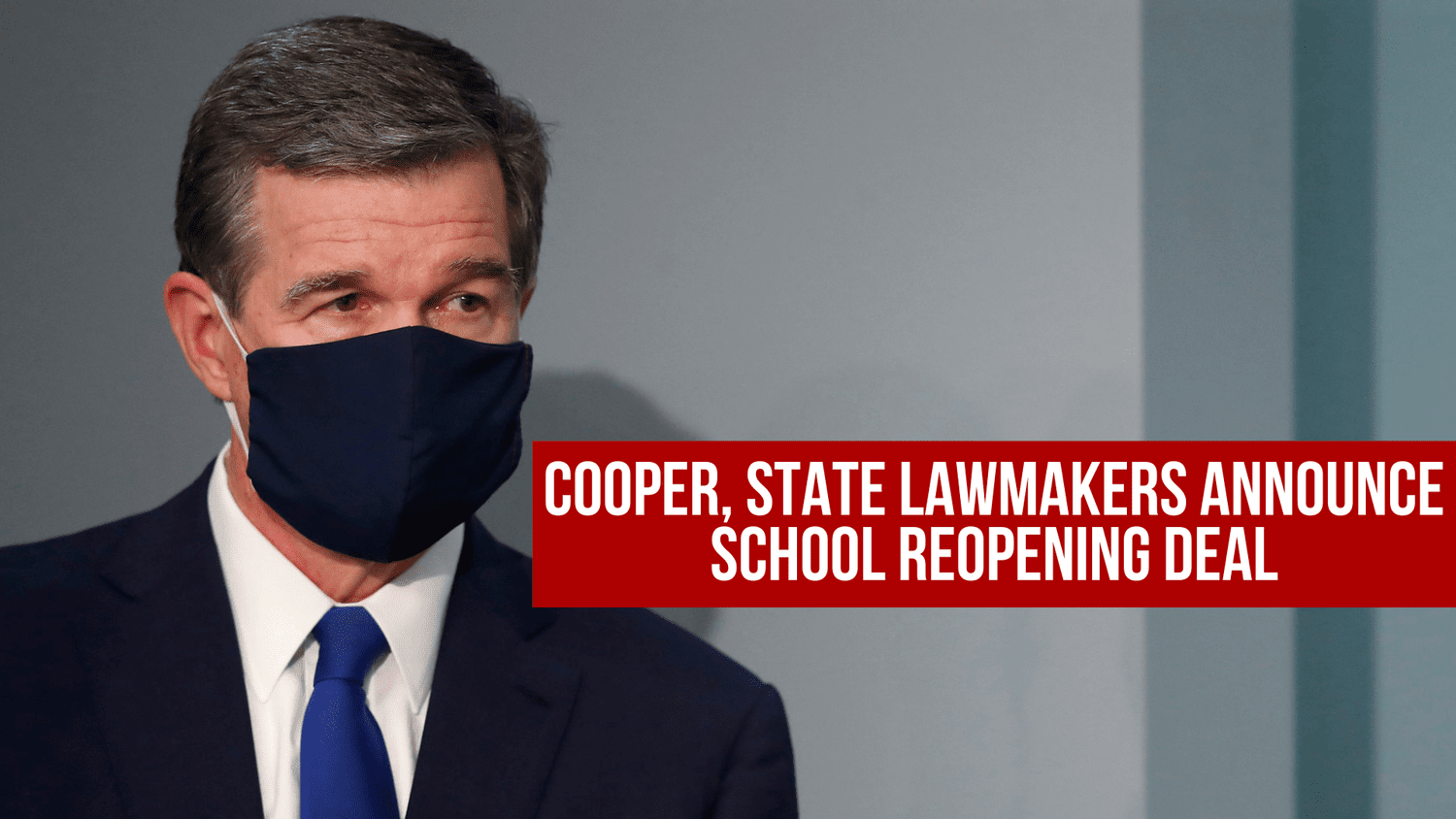
Democratic Gov. Roy Cooper and Republican lawmakers have reached an agreement on reopening public schools for in-person instruction under a compromise plan that returns most decision-making autonomy to local school boards.