The General Assembly’s Economic Development Caucus will be continuing its work examining ways to boost the state’s efforts to recruit film and television projects in the new biennium, renewing its Film Industry Study Committee, originally founded in late 2023 for the 2024 short session, to focus on issues and opportunities facing the film industry in North Carolina.
Senate Leader Phil Berger (R-Rockingham) filed a bill creating the Division of Accountability, Value, and Efficiency in the State Auditor’s office. Further, the bill requires the DAVE to review every state agency’s spending and staffing levels to get a complete picture of how they’re utilizing taxpayer funds and determine if the agency should continue to exist.
In 2021, the General Assembly passed HB 951, a bipartisan energy bill prioritizing regulatory guardrails to protect grid reliability and least-cost generation planning while pursuing Gov. Roy Cooper’s politically favored carbon reduction goals.
Senate Leader Phil Berger (R-Rockingham), along with Sens. Michael Lee (R-New Hanover) and Brad Overcash (R-Gaston), filed Senate Bill 227, “Eliminating ‘DEI’ in Public Education,” to prohibit promoting discriminatory policies and practices in public schools.
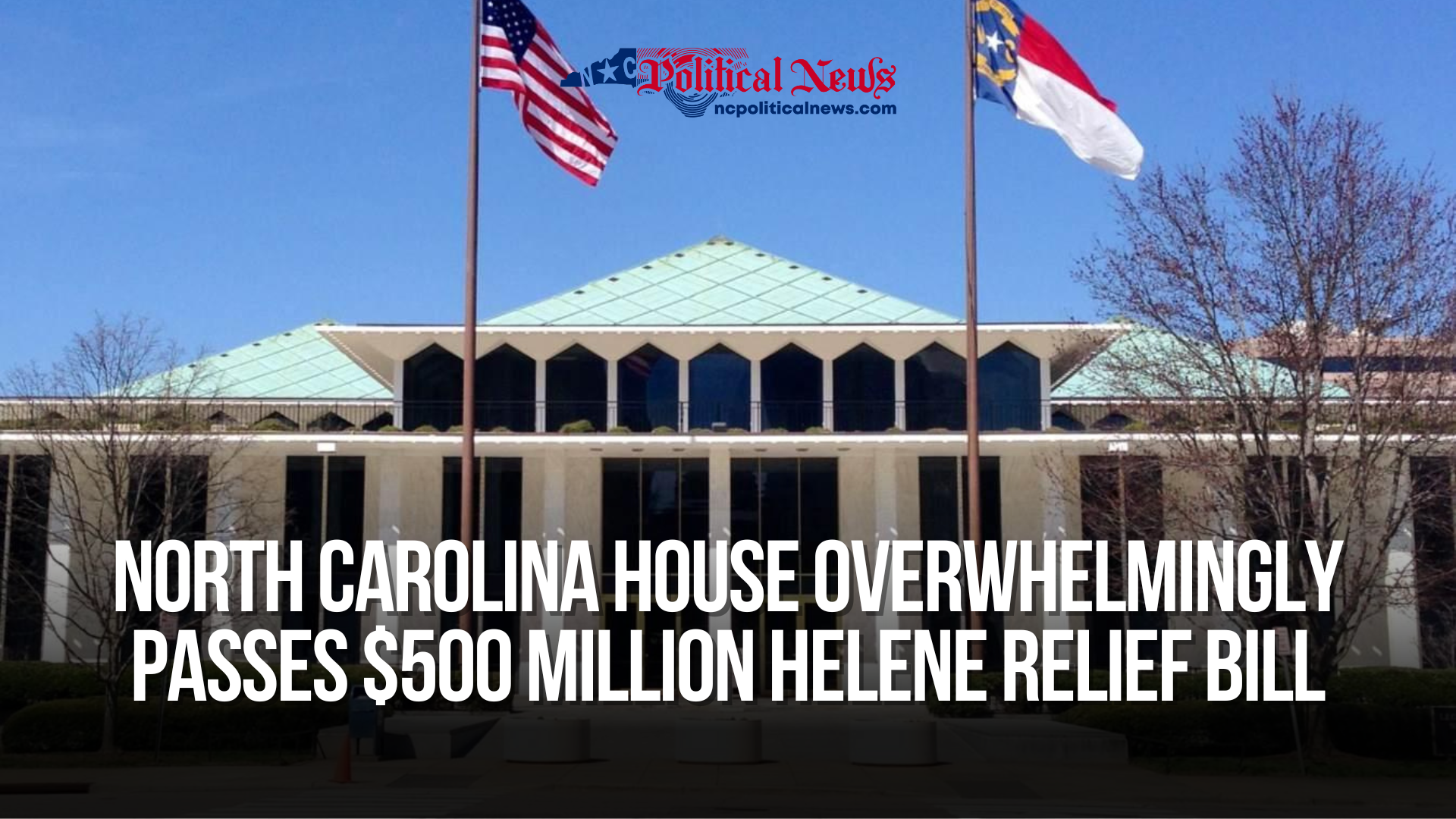
On Tuesday, the House unanimously approved HB 47, the “Disaster Recovery Act of 2025 - Part I,” allocating $500 million in additional Helene relief to Western NC. The bill provides critical funding to help survivors rebuild their homes, farms, businesses, and roads
Today, the North Carolina Senate passed the initial round of hurricane relief for Western North Carolina. The bill, among other things, creates a Helene Fund that will include $273 million from the state’s Savings Reserve, also known as the Rainy Day Fund.
New reporting from The Assembly and the News & Observer reinforce the need for the General Assembly to take oversight and accountability of state dollars more seriously. The General Assembly has funneled $55 million, collectively, to the U.S. Performance Center and the North Carolina Sports Legacy Foundation in order to “lure national governing bodies to Charlotte.”
Republicans in the North Carolina Senate voted to put one constitutional amendment on 2024 general election ballots, and passed two additional constitutional amendments for consideration.