As inflation continues to drive soaring costs across the U.S., Americans are in need of relief. Unfortunately, as Capitol Hill begins its mad dash to raise the debt limit prior to the New Year, credit card companies are yet again planning to hike swipe fees. This move will hit businesses and spike already high prices on everyday products for American consumers. North Carolinians are counting on our Congressman Patrick McHenry, as the ranking member of the House Committee on Financial Services, to oppose another swipe fee increase.
Business owners, educators, students, and North Carolinians at every corner of our state had to adapt to extraordinary circumstances over the past two years. From online learning to labor shortages, North Carolinians have been tenacious in tackling some of our state’s biggest challenges. Representing those families, business owners, and health care workers in the North Carolina Senate has been the honor of my life.
Benjamin Franklin gave us many great words of wisdom. One of his best lines is that we should “do well by doing good.” While this ideal may have worked in the politics and government of early American history in the 1700’s, we don’t see much of that sentiment in today’s public policy. People of all political stripes (right, middle, left and those not involved at all) are tired of the fighting and looking to support policies that exemplify the words of Mr. Franklin.
Benjamin Franklin gave us many great words of wisdom. One of his best lines is that we should “do well by doing good.” While this ideal may have worked in the politics and government of early American history in the 1700’s, we don’t see much of that sentiment in today’s public policy. People of all political stripes (right, middle, left and those not involved at all) are tired of the fighting and looking to support policies that exemplify the words of Mr. Franklin.
Here in North Carolina, most of us agree that everyone should have the freedom and opportunity to work hard, earn a living, provide for their families and contribute to communities. Politics aside, we share those values as Americans.
North Carolina is emerging from a worldwide pandemic strong and growing, with new jobs and new neighbors arriving daily. We welcome this growth, but in order for our communities to thrive, our infrastructure must catch up and keep up. In recent weeks, Vice President Kamala Harris, Transportation Secretary Pete Buttigieg and Second Gentleman Douglas Emhoff visited North Carolina with a plan to help transform our state and nation’s infrastructure.
Whatever happened to tax credits and tax deductions? How many more payments will people expect in the future before we declare the pandemic over? The utter reliance and potential household budgeting for future stimulus payments disincentivizes Americans from using their skills and creativity to find a way to meet their obligations. The unintended consequence of stimulus payments may very well be a methodical way of killing the American dream by taking away all incentives of hard work and individualism.
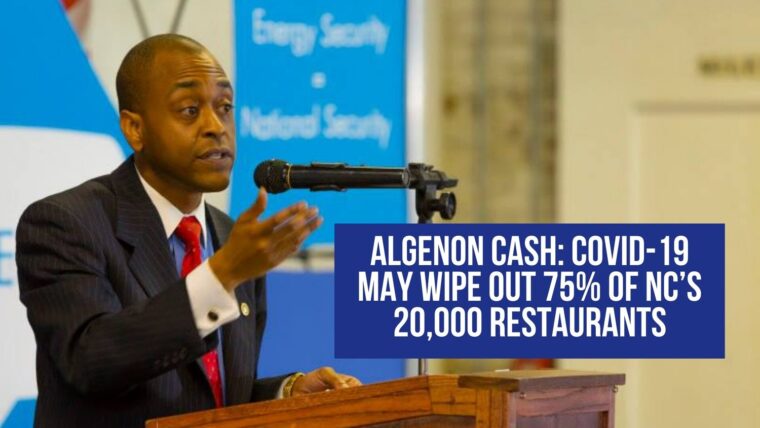
Small independently owned restaurants are facing an extinction-level event as we move deeper into colder months and the coronavirus spread reaches all-time highs. Without immediate financial aid, over 75% of the state’s 19,504 eating and drinking locations are in danger of closing permanently.Since the COVID-19 pandemic began in March, 17% of restaurants throughout the country (or about 110,000 establishments) have closed either permanently or long-term and 10,000 restaurants have closed over the last three months alone. As for the 10,000 restaurants that have closed over the past three months, the majority had been well-established in the industry for years, and on average, had been in business for 16 years.
On Sept. 3, a bipartisan supermajority in the North Carolina General Assembly appropriated $30 million for rural broadband to help rural areas impacted by the pandemic. The next day, Gov. Roy Cooper issued a press release, taking credit for our work, with the following statement: “This budget followed my recommendations on school enrollment funding and invested in important areas like high-speed internet access…” Seventy-five days after the legislation passed, and 74 days after Gov. Cooper touted the investment, his administration quietly ripped this money and broadband from the hands of rural North Carolinians.