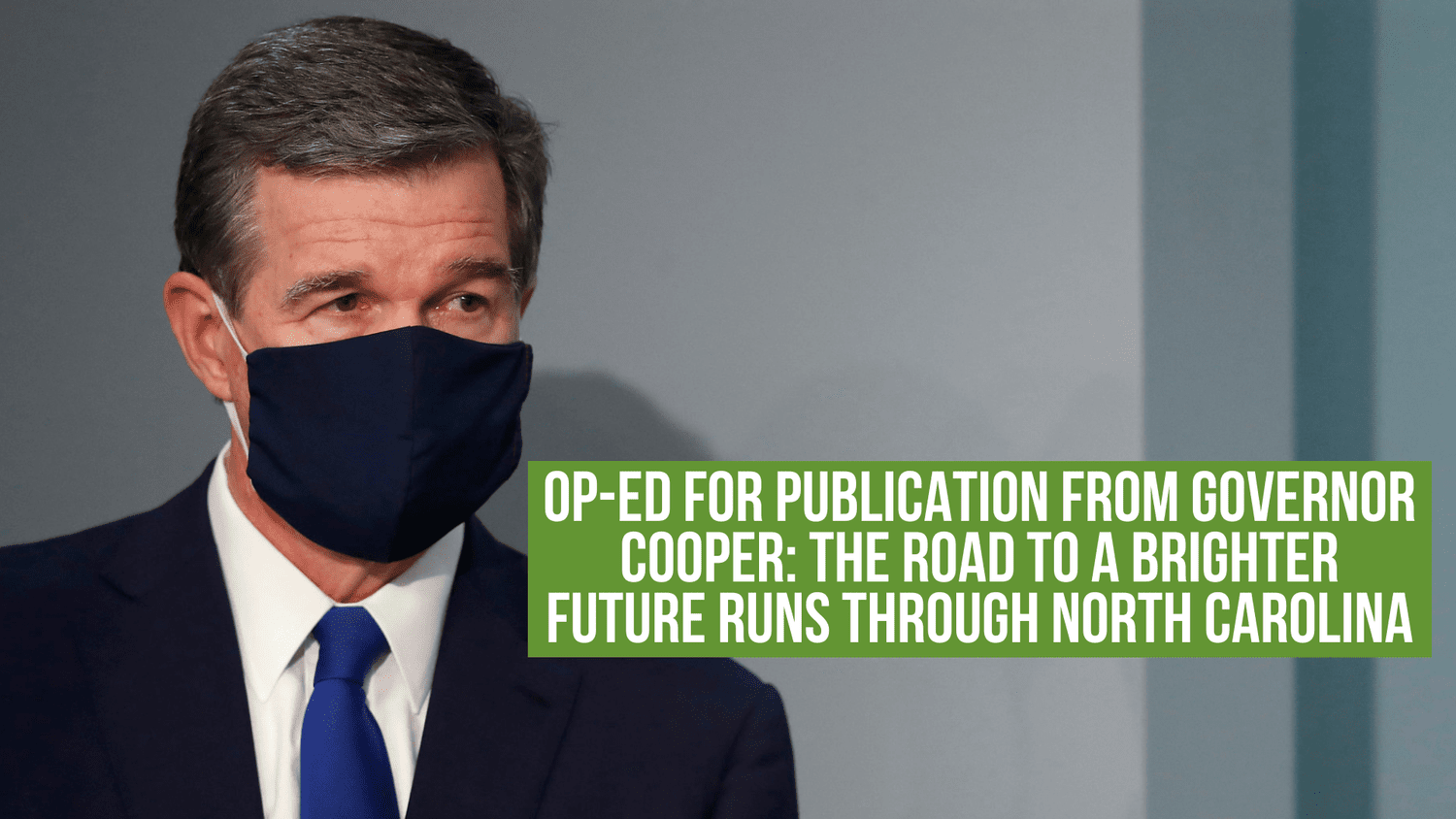
North Carolina is emerging from a worldwide pandemic strong and growing, with new jobs and new neighbors arriving daily. We welcome this growth, but in order for our communities to thrive, our infrastructure must catch up and keep up. In recent weeks, Vice President Kamala Harris, Transportation Secretary Pete Buttigieg and Second Gentleman Douglas Emhoff visited North Carolina with a plan to help transform our state and nation’s infrastructure.
Today, Governor Roy Cooper announced that he signed an Executive Order to help North Carolina’s businesses recover from the economic impact of the COVID-19 pandemic. Executive Order No. 210 extends the North Carolina Alcoholic Beverage Control Commission (ABC Commission)’s authorization to permit the delivery or carry-out of mixed beverages as an alternative to on-site consumption through June 1, 2021.
The North Carolina Department of Health and Human Services’ Division of Health Service Regulation today announced it has made a new temporary pathway available for individuals who worked in nursing homes during the COVID-19 pandemic as temporary nurse aides to be listed on the Nurse Aide I Registry.
The North Carolina Department of Health and Human Services today announced it is expanding eligibility for food assistance benefits to help college students who are struggling to purchase food and stay in school during the pandemic.
North Carolina’s governor would face a new 10-day limit on unchecked use of emergency powers, under a bill approved Tuesday on a party-line vote in the state Senate.
Today, the NC House voted 112-1 to pass House Bill 334 – Temporarily Align PPP Treatment to Federal Treatment, which will provide tax relief for small businesses and individuals impacted by the COVID-19 pandemic.
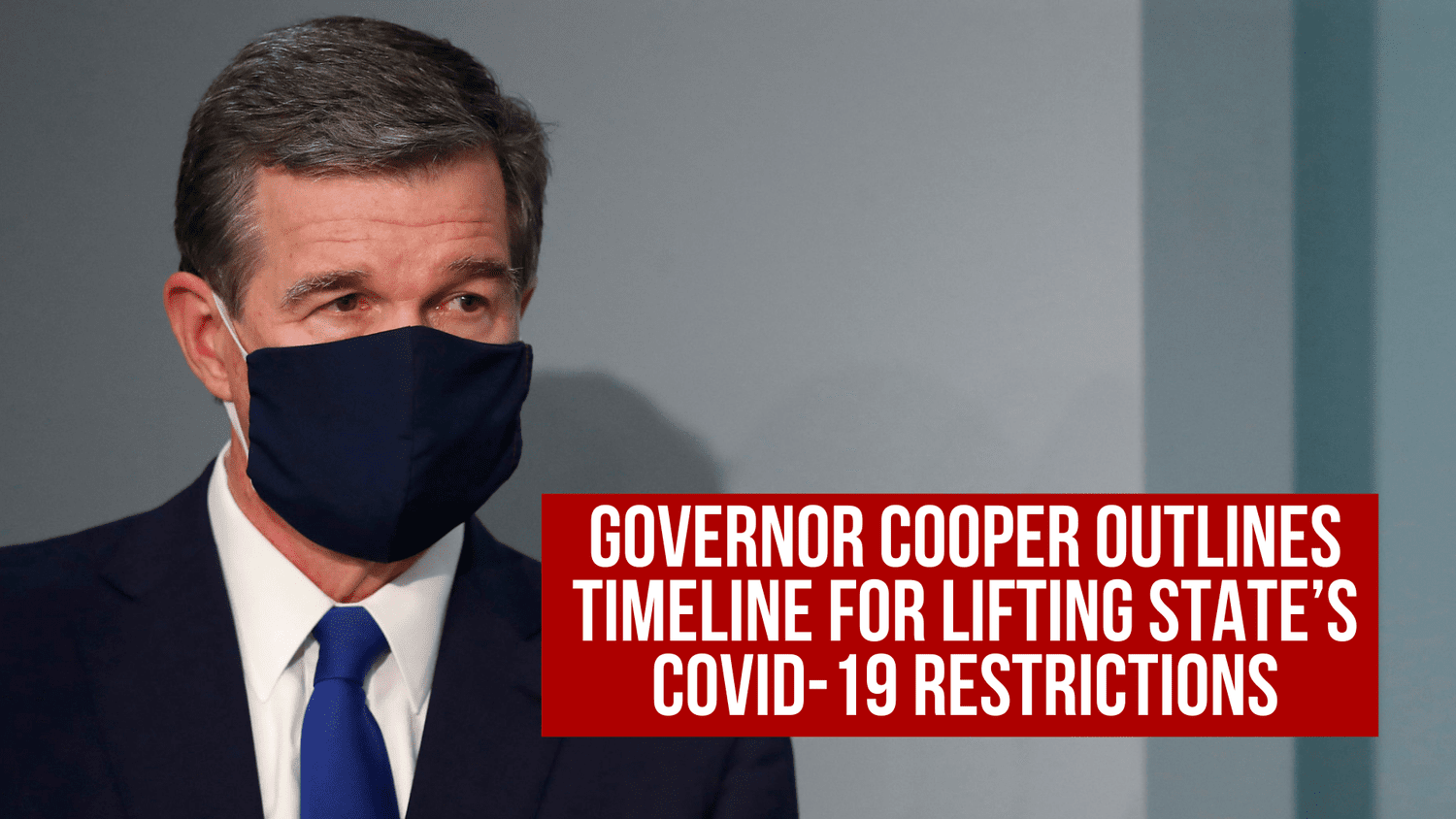
Governor Roy Cooper and North Carolina Department of Health and Human Services Secretary Mandy K. Cohen, M.D. laid out a timeline for lifting current pandemic restrictions today. With stable trends and continued vaccination success, the state expects to lift mandatory social distancing, capacity, and mass gathering restrictions by June 1. The Governor plans to issue an executive order next week outlining safety restrictions for the month of May.
Through the North Carolina Department of Health and Human Services’ COVID-19 Support Services Program, more than 35,000 households received relief payments, food, transportation to and from testing sites or additional supports to help them isolate or quarantine during the pandemic.
Responding to COVID-19’s death, suffering, and loss, by necessity governments swept aside some rules that let patients get care from medical professionals who weren’t doctors. As we approach widespread immunity, either with vaccinations or COVID patients recovering, questions about whether these regulations that blocked patients from seeing health providers were needed. Period.
The $1.9 trillion “COVID relief” bill just enacted by Congress and signed by President Joe Biden gives out $1,400 checks to most Americans. It boosts the child-tax credit, keeps weekly unemployment-insurance checks $300 higher than normal, and throws lots of other (borrowed) money around.
Majorities of the House and Senate agree that N.C. schools need legislative prodding to reopen, but they’re struggling to come to terms on how to do it.
State economists project North Carolina will have 17.6 percent more revenue this year than projected last year, an amount that can help rebuild the state as its economy emerges from the COVID-19 pandemic.