
RALEIGH – Democratic candidates led in 10 of North Carolina’s 14 U.S. House districts in the State Board of Elections’ Wednesday results file, positioning the party to expand its congressional delegation while several close contests remained unsettled.
The statewide picture is a count of leaders in unofficial returns, not a declaration that every contest has been called or certified. Republicans entered Tuesday’s election holding 10 of the state’s 14 House seats, WRAL reported.
An NC Political News tally of the state’s precinct-level file found Democratic leaders in districts 1, 2, 4, 5, 6, 9, 11, 12, 13 and 14. Republican candidates led in districts 3, 7, 8 and 10. The tally sums each candidate’s reported total votes across precinct records within the same congressional contest.
Two contests illustrate why the distinction matters. In the 5th District, Democrat Chuck Hubbard had 139,034 votes to Republican Rep. Virginia Foxx’s 138,935, a 99-vote lead. In the 3rd District, Republican Rep. Greg Murphy had 117,583 votes to Democrat Raymond Smith’s 117,350, a 233-vote advantage.
Other Democratic challengers had larger leads in the downloaded file. Cyril Jefferson led Addison McDowell by 6,264 votes in the 6th District; Richard Ojeda led Richard Hudson by 6,015 in the 9th; Paul Barringer led Brad Knott by 7,652 in the 13th; and Lakesha Womack led Tim Moore by 6,415 in the 14th.
Jamie Ager led Jennifer Capps Balkcom in the open 11th District. Democratic incumbents Don Davis, Deborah Ross, Valerie Foushee and Alma Adams also led their contests. WRAL independently reported the broader Democratic gains and the especially narrow margins in the Foxx and Murphy races.
The standings could substantially change the partisan composition of North Carolina’s representation in Washington. They do not measure why voters made their choices, and the results file alone cannot establish the effect of advertising, redistricting or any campaign message.
The State Board says additional eligible military and overseas ballots, provisional votes and successfully cured absentee ballots may be added during the post-election canvass. Reported totals can therefore change after election night.
Sources
- N.C. State Board of Elections: Nov. 3 precinct results ZIP
- WRAL: North Carolina congressional results, updated Nov. 4
- N.C. State Board of Elections: reporting and post-election timeline
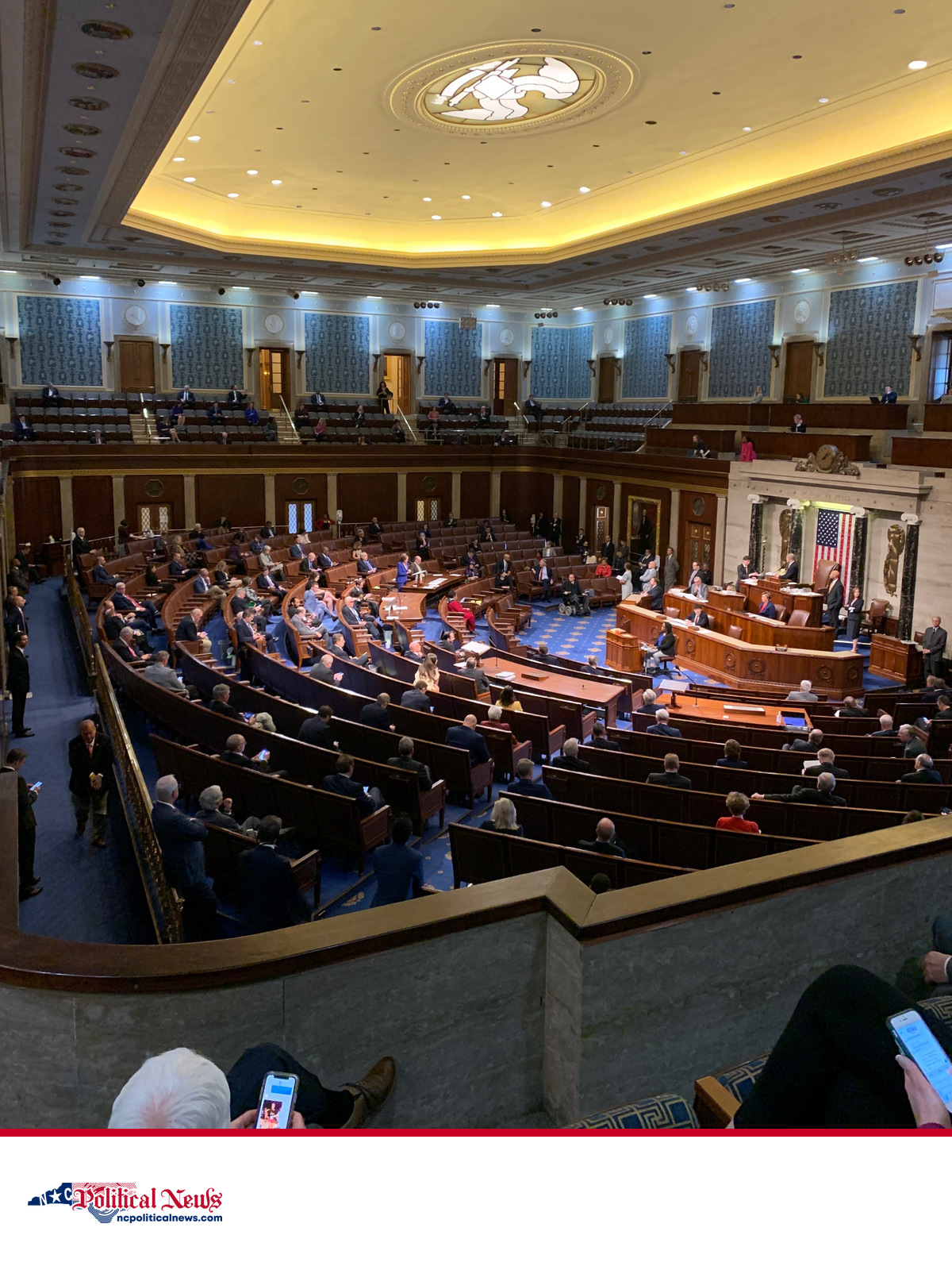
Photo Credit: File photograph of the U.S. House chamber in Washington, March 27, 2020, by Rep. Josh Harder, via Wikimedia Commons. Public-domain U.S. Congress photograph. Cropped and resized; this is not the incoming Congress or an election-night scene.
Editor’s Note: This article was drafted with the assistance of artificial intelligence and was reviewed and fact-checked by a member of the NC Political News editorial team before publication.