HIGH POINT – A High Point University poll finds Democrats leading Republicans 48%-44% on a statewide generic U.S. House ballot among likely North Carolina voters.
Another 2% chose another party and 7% were unsure, according to HPU’s Sept. 24 release. The reported percentages total 101% because they are rounded.
The university surveyed 1,003 North Carolina adults, including 813 self-identified registered voters and 706 likely voters. The U.S. House result is based on those 706 likely voters.
HPU describes the sample as a nonprobability online panel supplied by Dynata. Respondents came from an existing panel rather than a random sample of all North Carolina voters. The university reports a plus-or-minus 3.9 percentage-point credibility interval for likely-voter results and says a conventional margin of sampling error is not appropriate for the survey.
HPU’s published records disagree on the field dates. The technical memo says interviews were conducted Sept. 9-16, while the companion public summary says Sept. 6-16. The university’s public materials did not resolve the difference.
The survey asked respondents whether they would vote for the Democratic or Republican candidate for the U.S. House in their district. It did not name candidates or measure any individual congressional contest.
The State Board of Elections says all 14 North Carolina U.S. House seats are on the Nov. 3 ballot. Those races are decided separately by district.
The statewide generic result is an aggregate measure. It does not isolate the 1st Congressional District or any other district, account for the political makeup of individual districts, or translate directly into a projected number of seats for either party.
The poll provides one current measure of likely-voter party preference. It does not by itself establish which party will win more North Carolina seats or control the U.S. House. Comparisons with other polls require attention to sample design, likely-voter models, question wording and field dates.
Sources
- High Point University Poll 127 technical memo
- High Point University Poll 127 public summary
- North Carolina State Board of Elections: 2026 election offices and dates
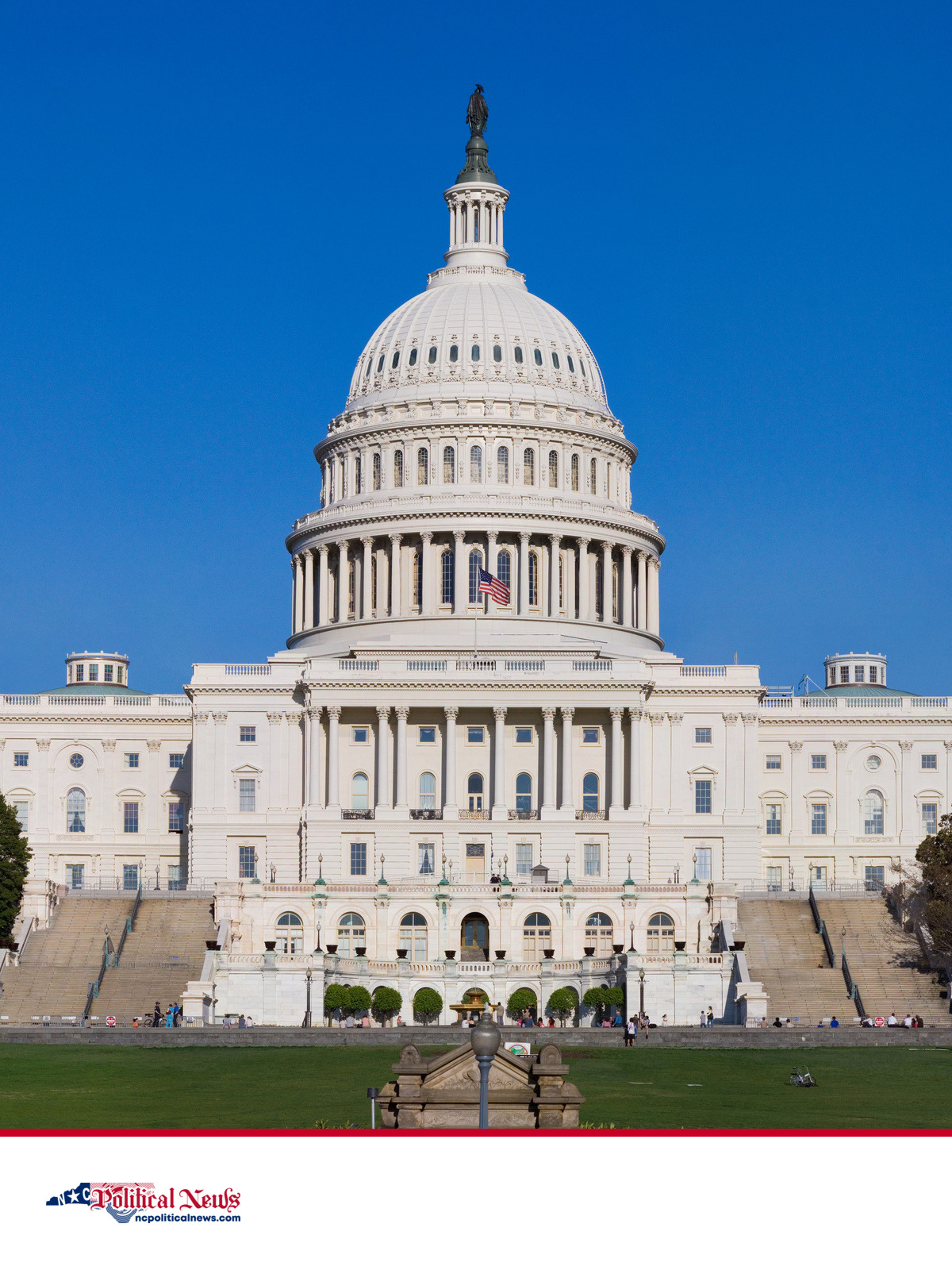
Photo Credit: Noclip via Wikimedia Commons, public domain. Western front of the United States Capitol in Washington, D.C. Adapted by cropping and adding the NC Political News footer and logo.
Editor’s Note: This article was drafted with the assistance of artificial intelligence and was reviewed and fact-checked by a member of the NC Political News editorial team before publication.