RALEIGH - A Carolina Journal poll of North Carolina general-election voters found broad support for Congress enforcing constitutional limits on presidential authority, alongside dissatisfaction with the state’s divided legislative outcome.
The survey found 70.2% of respondents said Congress should enforce constitutional limits on the president even when they generally support the president. Another 58.4% favored a stronger congressional role in limiting presidential power.
Carolina Journal released the poll Nov. 18. The survey included 600 North Carolina voters who participated in the 2026 general election and was fielded Nov. 5-8 through live telephone interviews and text-message invitations to an online survey. The reported margin of error was plus or minus 4 percentage points at the 95% confidence level.
On state politics, 60.6% said they were not pleased with voters producing a divided General Assembly. The reasons were split: 25.6% said they preferred complete Democratic control, 23% preferred complete Republican control and 12% said they were concerned about gridlock. Recounts in several state legislative races were still underway when the poll was released, and the State Board of Elections scheduled the state canvass for Nov. 24.
The survey also found 72.8% were confident the election was free and fair. President Donald Trump’s approval rating was 34.8%, while 64.3% disapproved. Those figures describe the views of the surveyed North Carolina election voters rather than all state residents.
When respondents were asked what the outgoing General Assembly should prioritize, 20.4% selected completing the state budget or resolving unfinished budget matters. Another 15.9% favored handling only essential or time-sensitive business, while 15.5% selected tax relief or tax-code changes.
As with any poll, sampling error is one source of uncertainty, and question wording, question order and nonresponse can also affect results. The findings are a snapshot of the surveyed electorate during the four-day field period, not a prediction of future political behavior.
Sources
- Carolina Journal - Nov. 18 post-election poll release
- Carolina Journal Poll - toplines and methodology
- North Carolina State Board of Elections - recount process and state-canvass schedule
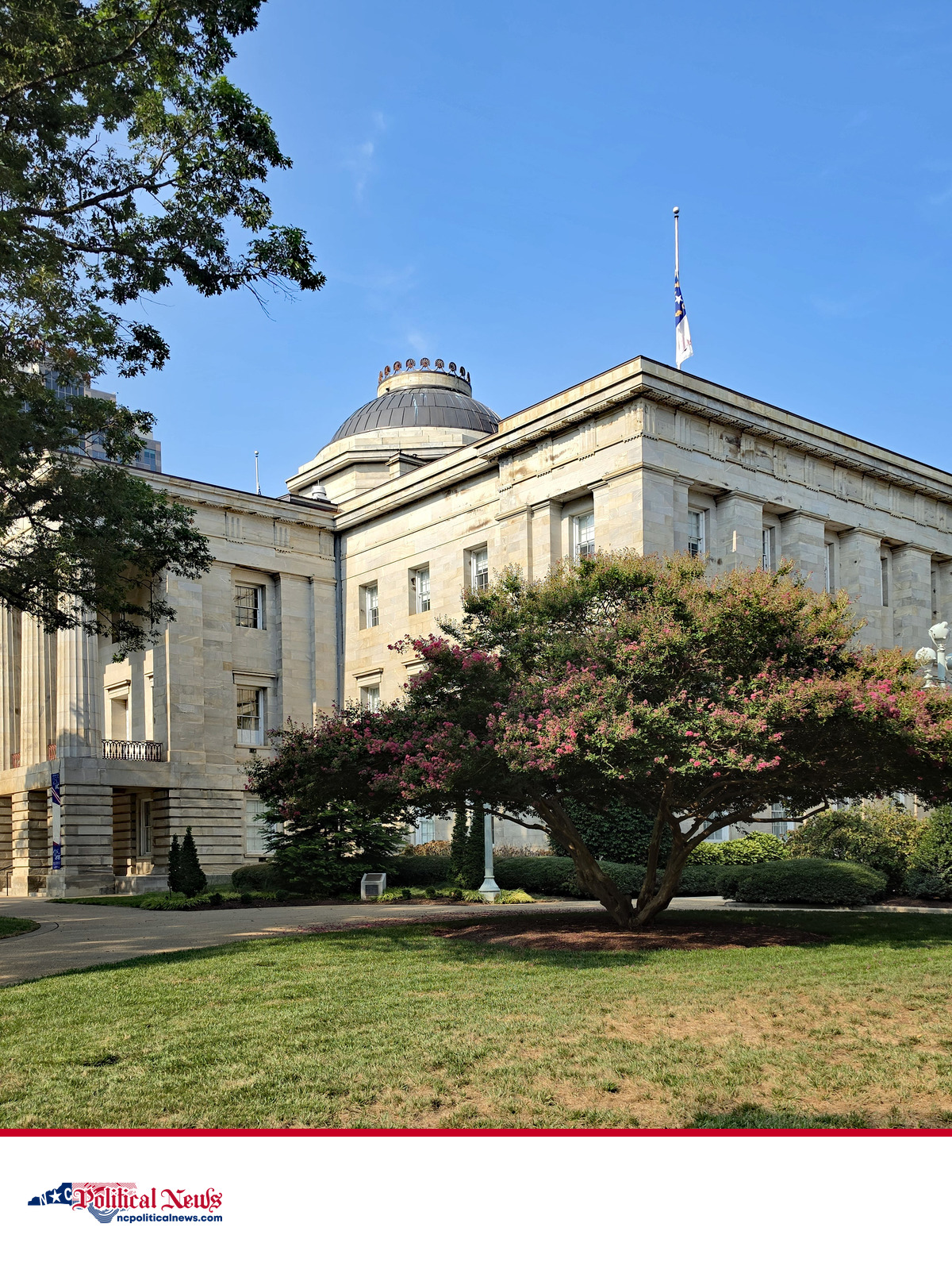
Photo Credit: P. Hughes via Wikimedia Commons, licensed under CC BY 4.0. North Carolina State Capitol in Raleigh, photographed July 18, 2026. Proportionally cropped and resized, then combined with the unchanged NCPN footer and logo.
Editor’s Note: This article was drafted with the assistance of artificial intelligence and was reviewed and fact-checked by a member of the NC Political News editorial team before publication.