Led into the building and encouraged by a cadre of alt-right provocateurs, the mob also produced priceless propaganda for the enemies of our country. “The celebration of democracy is over,” one Russian official wrote. “America no longer forges that path, and consequently has lost its right to define it. Much less force it on others.” A state-run Chinese newspaper headlined its coverage this way: “An iconic humiliation! The madness of the Capitol has dragged the U.S.’s standing into its Waterloo!”.
It might be a new year, but remote learning isn’t over. As the legislature enters a new session, students are leaving the classroom. Learning is back online in many of the state’s major districts. Learning loss is reaching historic highs, and lawmakers want to make sure students aren’t left behind.
With Democrats in charge of the White House, and U.S. House, and (possibly as of this writing) the U.S. Senate, you can expect a push by left-wing activists and politicians to repeal some federal tax cuts enacted by the previously Republican Congress and signed by President Trump.
After getting many political predictions wrong in 2016, including but not limited to the results of the presidential election, I threw my long-cherished crystal ball out and started building a new one.
When Democrats attack pro-growth tax reform as “trickle-down economics,” I can understand their rhetorical intent. But the charge is silly on multiple levels — including the fact that every Democrat who ever serves in state or local office spends great time and effort to try to recruit business executives, entrepreneurs, investors, and high-value professionals to their communities.
May I tell you a bit about the pioneering Campbells of eastern North Carolina? The patriarch of the family, minister James Archibald Campbell, founded a school in Buies Creek in 1887 that we now know as Campbell University. In the early days, privation and bad luck sometimes forced “Jim Arch” to keep institution alive through sheer force of will.
Among the pagan-inspired customs of the Christmas season, there has come to be the ritualistic burning of the straw man. Specifically, I refer to the traditional seasonal column by a sly journalist or political analyst asserting that the exchange of Christmas gifts is a major lose-lose for the economy.
Not all heroes wield blades. And many problems cannot be solved simply by hacking away at them. Their causes are complex and interconnected. They twist and turn. They are fabrics that must be unraveled, patiently and prudently, to be understood. Often, solutions come from following seemingly small threads in unexpected directions, and weaving them into something new.
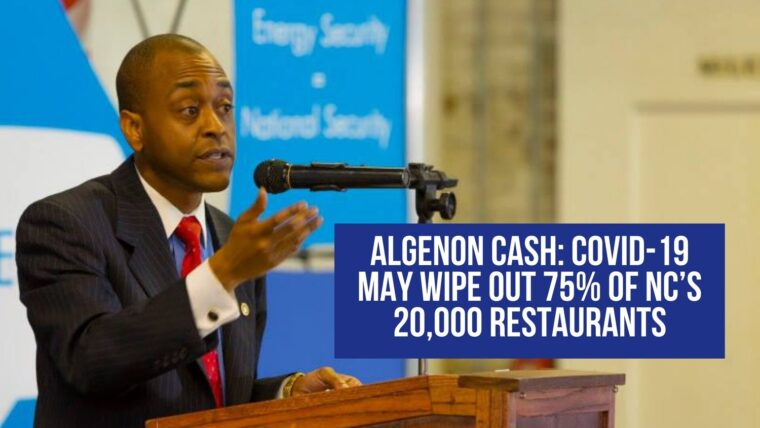
Small independently owned restaurants are facing an extinction-level event as we move deeper into colder months and the coronavirus spread reaches all-time highs. Without immediate financial aid, over 75% of the state’s 19,504 eating and drinking locations are in danger of closing permanently.Since the COVID-19 pandemic began in March, 17% of restaurants throughout the country (or about 110,000 establishments) have closed either permanently or long-term and 10,000 restaurants have closed over the last three months alone. As for the 10,000 restaurants that have closed over the past three months, the majority had been well-established in the industry for years, and on average, had been in business for 16 years.
As of November, North Carolina’s state government has some $4 billion in unreserved cash in its General Fund, plus well north of $1 billion in its rainy-day account and other reserves.
The U.S. Supreme Court gave states the power to regulate the companies that negotiate between insurers and pharmacies, otherwise known as pharmacy benefit managers — the jargon for middlemen. The court unanimously ruled in favor of Arkansas’ regulatory reforms Thursday, Dec. 10.
On Sept. 3, a bipartisan supermajority in the North Carolina General Assembly appropriated $30 million for rural broadband to help rural areas impacted by the pandemic. The next day, Gov. Roy Cooper issued a press release, taking credit for our work, with the following statement: “This budget followed my recommendations on school enrollment funding and invested in important areas like high-speed internet access…” Seventy-five days after the legislation passed, and 74 days after Gov. Cooper touted the investment, his administration quietly ripped this money and broadband from the hands of rural North Carolinians.