
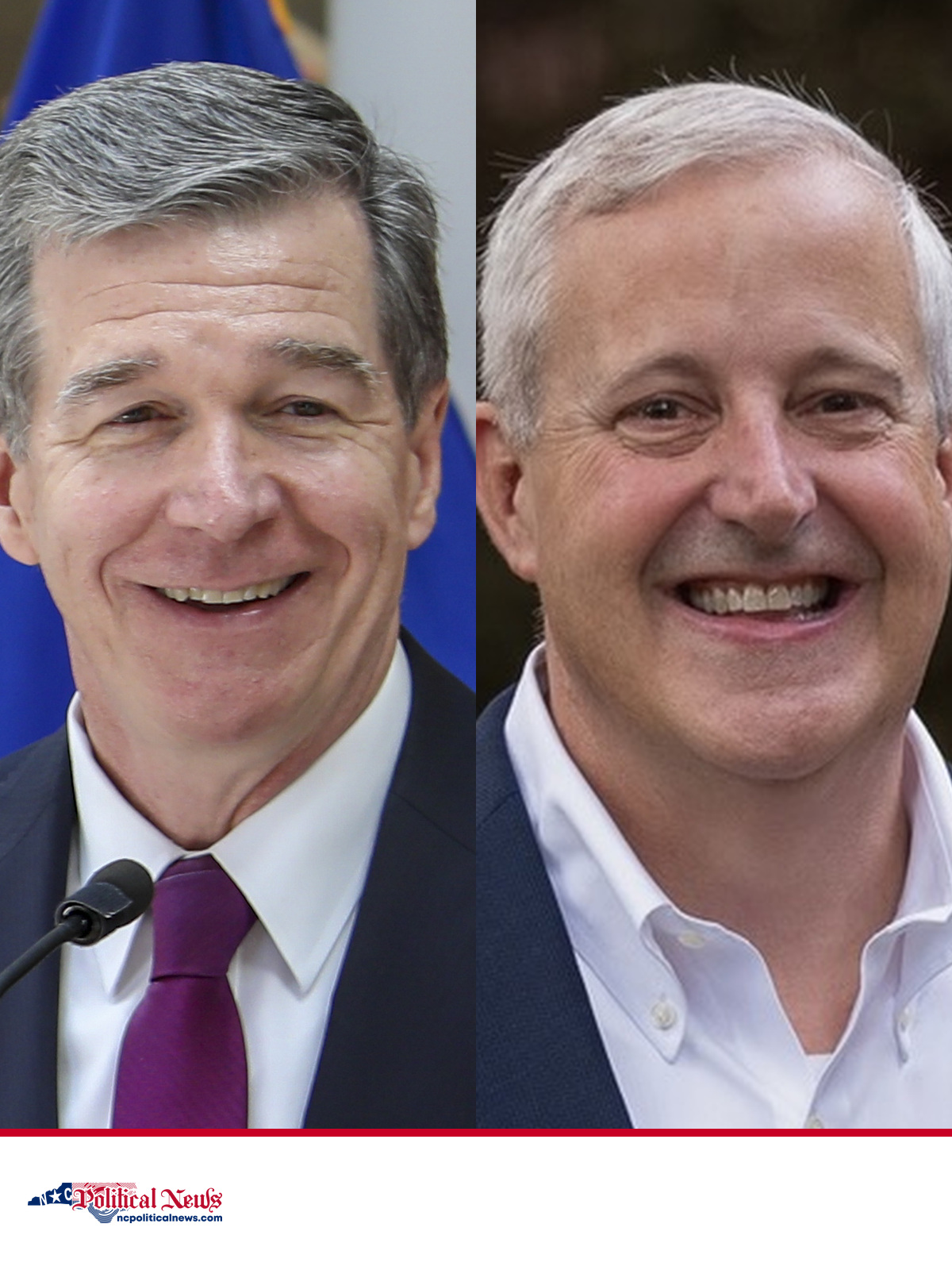
WASHINGTON – New Federal Election Commission data show Democrat Roy Cooper’s principal Senate committee had $12.48 million in cash entering October, while Republican Michael Whatley’s committee reported $916,101.50.
Cooper for North Carolina reported $47.19 million in total receipts and $34.71 million in disbursements from its July 25, 2025, start through Sept. 30, 2026. Whatley for Senate reported $13.41 million in receipts and $12.50 million in disbursements from July 1, 2025, through Sept. 30.
The cash figures provide an apples-to-apples look at the candidates’ principal campaign committees as the open-seat race enters its final weeks. They do not include every dollar raised or spent by joint fundraising committees, party organizations or independent groups.
The FEC summaries also show large transfers from other authorized committees. Cooper’s principal committee reported $27.15 million in transfers, while Whatley’s reported $5.10 million. Those transfers are included in total receipts, so the totals should not be described as money raised solely from individual donors.
Axios reported Friday that Cooper raised about $20 million and Whatley about $2 million during the third quarter. The outlet cautioned that its national comparison combined FEC filings with figures reported by campaigns, some of which included affiliated joint fundraising committees.
The different accounting explains why the campaign-reported quarterly figures do not match the changes in each principal committee’s cumulative receipts. For direct comparison, the FEC cash-on-hand figures measure money remaining in the two principal committees at the end of Sept. 30.
The reported cash gap between the principal committees was about $11.56 million at the quarter’s end. Cash on hand can affect how much a campaign can spend on advertising, organizing and other final-week operations, but it is not a direct measure of voter support.
Outside spending is separate from candidate committee finances. Money spent by super PACs and other independent groups does not become cash controlled by either campaign and is subject to separate reporting rules.
The North Carolina contest is for the seat held by Republican Sen. Thom Tillis, who did not seek reelection. The financial reports document campaign resources; they do not predict the election outcome.
Sources
- Federal Election Commission: Cooper for North Carolina committee overview
- Federal Election Commission: Whatley for Senate committee overview
- Axios: Senate fundraising comparison, Oct. 16
Photo Credit: Roy Cooper: U.S. Army photo by Staff Sgt. Mary Junell / North Carolina National Guard, public domain in the United States. Michael Whatley: Whatley for Senate campaign press photograph from the campaign’s media toolkit.
Editor’s Note: This article was drafted with the assistance of artificial intelligence and was reviewed and fact-checked by a member of the NC Political News editorial team before publication.