
RALEIGH – North Carolina utility regulators approved a new long-range power plan that extends some coal-unit retirements and directs Duke Energy to pursue new natural gas, solar and battery storage projects as electricity demand grows.
The North Carolina Utilities Commission said its Carbon Plan and Integrated Resource Plan decision followed a 12-day expert-witness hearing, five public-witness hearings and more than 600 consumer statements. Four participating commissioners approved the order unanimously. Commissioner Donald van der Vaart did not participate.
The order directs Duke to pursue about 2,730 megawatts of new combined-cycle natural gas generation and about 1,111 megawatts of additional combustion-turbine generation between 2030 and 2033. Together, those projects total about 3,841 megawatts. WRAL reported that some projects in the plan will still need separate regulatory approval and additional public review.
For coal, regulators extended certain unit-retirement dates beyond those in the commission’s 2024 plan and required Duke to submit an updated retirement analysis with its next proposal. The commission’s release did not list a single new retirement date for every affected unit. The decision is the first biennial Carbon Plan since state lawmakers removed the former interim goal of reducing power-sector carbon emissions 70% from 2005 levels by 2030. The statutory 2050 carbon-neutrality target remains.
The plan also authorizes Duke to procure up to 2,300 megawatts of new solar generation for service between 2032 and 2034. It calls for up to 2,700 megawatts of additional battery storage, which could bring planned system storage to as much as 5,400 megawatts by 2034.
Regulators extended through 2028 Duke’s authority to spend up to $440 million on advanced nuclear development. That work preserves options for either 600 megawatts of small modular reactors or about 1,117 megawatts of large light-water generation. The commission also authorized licensing work at the W.S. Lee site in South Carolina and the Shearon Harris site in North Carolina, while requiring a new nuclear docket and a 2027 technical conference before any construction decision.
The order authorizes up to $55.6 million for near-term development of the Bad Creek II pumped-storage project, preserving an option for 1,760 megawatts by 2040. It also allows Duke to keep planning for a 22% reserve margin by 2031.
Duke called the decision an “all-of-the-above” approach. Environmental groups quoted by WRAL praised the storage and hydropower provisions but criticized the plan’s reliance on natural gas and what they described as missed opportunities for energy efficiency and customer-owned solar.
The commission said the two-year planning process allows it to adjust for demand forecasts, costs, market conditions and resource availability. Duke is scheduled to submit its next proposed plan in fall 2027.
Sources
- North Carolina Utilities Commission – Nov. 16 Carbon Plan and Integrated Resource Plan release
- WRAL – Nov. 16 report, updated Nov. 17, on the approved plan
- Business North Carolina – Nov. 16 report on the commission’s construction plan
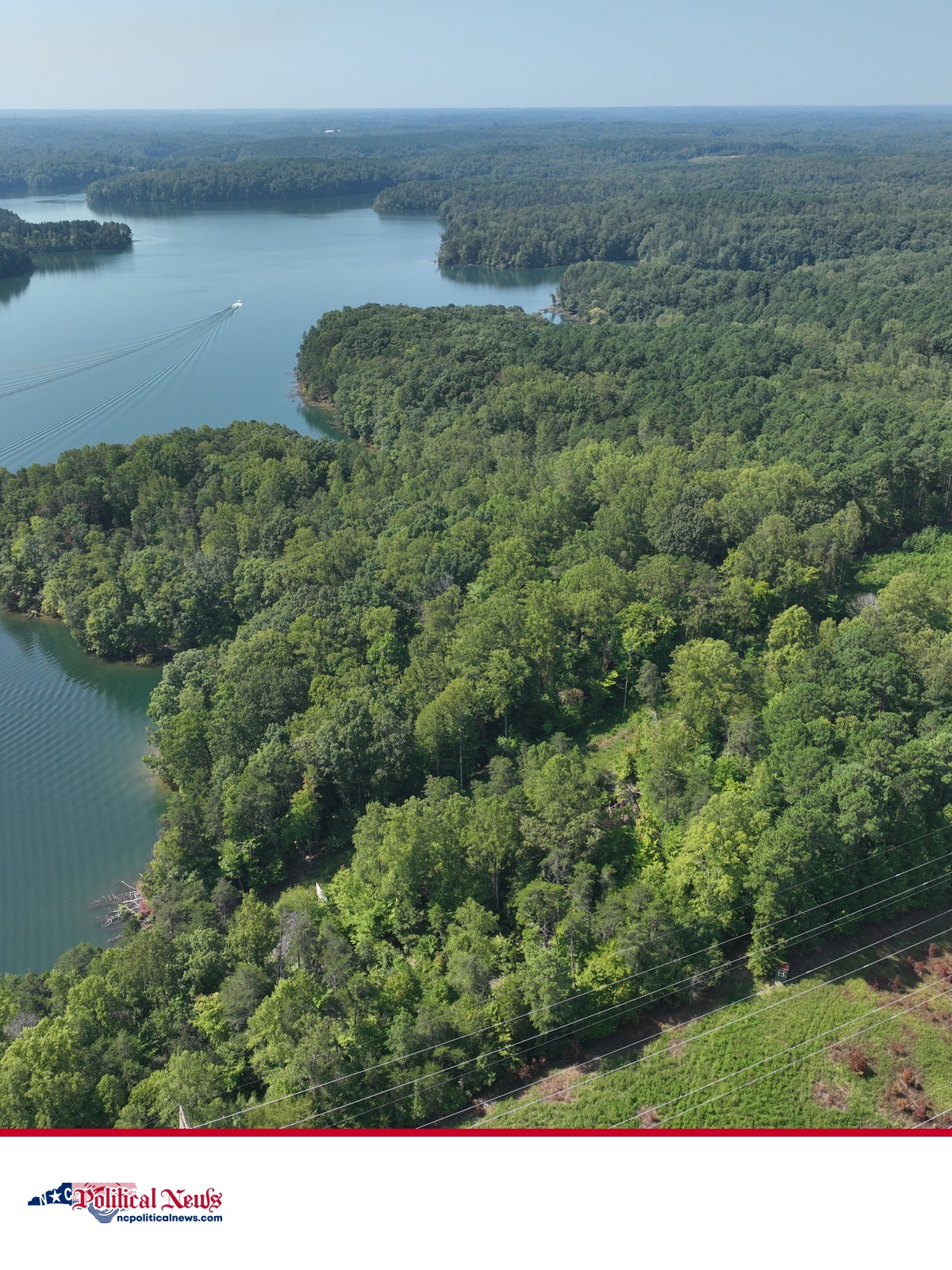
Photo Credit: Duke Energy Corporation. Aerial file photograph of the forested Belews Creek tract in Stokes County under evaluation as a potential future nuclear site. News media use only. Context image; the commission’s 2026 plan preserves nuclear-development options but does not itself authorize construction at Belews Creek. Photographed Aug. 29, 2024. Proportionally center-cropped and resized, then combined with the unchanged NCPN footer and logo.
Editor’s Note: This article was drafted with the assistance of artificial intelligence and was reviewed and fact-checked by a member of the NC Political News editorial team before publication.